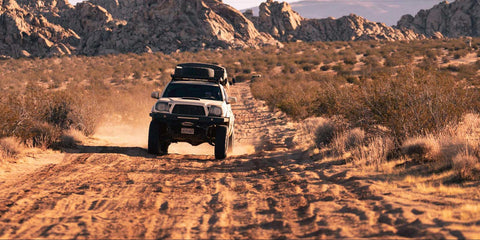
Old Man Emu MT64 Review: More Travel, More Control, More Fun for the Toyota Tundra
Posted by Sean Law-Bowman on


How We Got Here: The Tundra’s Suspension Journey
We’ve cycled through almost every popular suspension package on this platform:
- Eibach Stage 1: Too short, topped out constantly.
- Eibach Stage 2: Slightly longer, still topping out.
- ICON EXP + 2.0 rears: Better travel, but rear shocks needed more muscle.
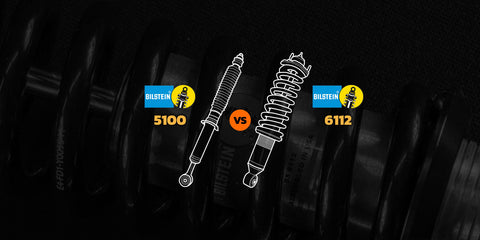
- Bilstein 6112 / 6100: Firm, fast, love to be pushed, but not much added travel and often pretty harsh.
Then came the MT64s: noticeably longer, noticeably plusher, and surprisingly supportive. While many Tundra kits stay nearly stock in length (and compensate with stiff valving), the MT64s give you real travel and a compliant ride.


Fire Road Performance: Plush, Quiet, Drama-Free
Washboard roads are where stock and many aftermarket kits fall apart. Not here.
- 37 PSI tire pressure (as with other tests)
- 15 mph to 40 mph test speeds
- Zero harshness, zero chatter, zero complaints
The MT64s smooth out chatter better than the Bilsteins, Icons, and even remind us of Jeff’s Radflo 500R on his 4Runner (just with a little extra support). At 5 mph or 40 mph, the truck stays calm, quiet, and controlled.
“These are the most comfortable shocks we’ve run on this Tundra.”


High-Speed Whoops: The Surprise Champion
We didn’t expect Old Man Emu to shine here… but they absolutely did.
- At 25 mph, the truck wasn’t happy.
- At 48–52 mph, these shocks rip.
No harsh top-outs, no violent rebound cutoff, no 8112 clunk. The internal top-out piston helps the truck stay composed, even when the suspension fully unloads.
Through the Hollywood-style whoops, Jeff was driving one-handed (not recommended, but telling). Even at 54 mph, the MT64s stayed stable and predictable.
With a good set of bump stops, we’d call the MT64s the ultimate interim setup before long-travel or bypass setups.


Rock Crawling & Technical Trails: Travel Makes the Difference
Most Tundra owners won’t be blasting whoops at 50 mph but everyone encounters articulation challenges.
The MT64s shine here thanks to:
+ ~2 inches of wheel travel over Bilstein 6112/6100
This doesn’t sound like much on paper, but on-trail it’s massive.
- Tires stay planted longer
- Transitions from droop to compression are smooth
- No harsh tire “slaps” on touchdown
- Rebound returns cleanly to ride height — not above it
We twisted the truck up enough to lift a tire to what felt like five feet in the air, and the MT64 handled every transition gracefully.
This is one of the first times we’ve said: “Old Man Emu nailed the tuning.”


Frame Twister: Comfort Where Others Beat You Up
This is usually the section that separates livable shocks from unbearable ones.
The MT64’s performance stood out:
- No head-smashing lateral kicks
- Soft initial movement
- Good mid-stroke support
- Predictable rebound recovery
- Sean’s injured back survived the day (a miracle)
Compared to the 6112/6100:
- The Bilsteins felt rougher on the smooth part of this course
- MT64s stayed composed over the worst of it
This is where comfort-focused valving, plus that extra travel, truly pays off.


Handling: The One Weak Spot
At the limit, the rear end can get a little loose.
On fast directional changes (like our emergency-avoidance chicane), the rear loads up on the outside tire, releases suddenly, and snaps the truck toward the opposite side.
Our findings:
- Likely due to lighter rear spring rate and/or softer low-speed compression
- Not dangerous, but unexpected if you’re not ready
- Easily mitigated with a stiffer rear sway bar
- Most noticeable only at true handling limits on loose terrain
For 95% of buyers: this won’t matter. For the desert rats among you: take note.


Street Ride & Load Handling: Surprisingly Excellent
We were worried the single-rate OME coils might be too soft when loaded… but they held up exceptionally well.
With bikes and a trailer:
- Zero sag
- No need to air up rear airbags (where Icons required it)
- Stable, level ride
For incredibly heavy loads , you may want:
- OME’s heavier-rate coils for much more Constant Load
- A dual-rate spring (Dobinsons, Icons) for a great amount of Varying Load
For daily driving, weekend gear, and moderate towing, the OME standard load single-rate springs work better than expected.


Who Should Not Run the MT64?
Only a few reasons:
-
You don’t want to run at least 2.5–3 inches of lift
MT64’s travel requires it. -
You don’t want to swap axles or add a diff drop (SR5 owners especially)
- The extra travel means higher CV angles.
- These trucks can use a bracket-style diff drop: cheap, easy, and way better than spacer-style but it’s still an install step.
-
You have the budget for BP-51s, Blackhawks, or full long-travel
Those are better (and far more expensive) options.
Who Should Run MT64s?
- You want the plushest ride we’ve felt on this truck
- You want more travel
- You want a setup that’s great everywhere off-road
- You want excellent comfort in town
- You want high-speed capability without harshness
- You want articulation that actually moves the truck forward
- You want all of this at a very fair price point
The MT64s may be the most well-rounded Tundra suspension we’ve tested in this middle tier.


Final Verdict: A Shockingly Good Package
It’s rare that a suspension kit scores this well in every off-road category:
- Washboards: A+
- Whoops: A (with a note about heat after repeated runs)
- Rock crawling: A+
- Frame Twister: A+
- Street ride: A
- Handling at the limit: B / B+ (fixable)
If these are in your budget and you want a significant performance jump without going into premium shock territory, this is one of the best options available for the Tundra right now.
We honestly struggled to find any reason why we wouldn't recommend them.