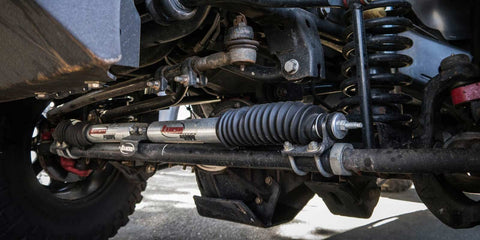
TRD Pro 4Runner Fox Shocks get an Upgrade - Factory Race Series
Posted by Sean Law-Bowman on
Position-sensitive shocks don’t like surprises, and the stock Fox 2.5s on this TRD Pro 4Runner were deep into their unhappy zone. With more than 600 pounds of constant overland load, the truck’s ride height collapsed, the shocks lived in their stiffest ride zones, and the once-comfortable PRO ride became harsh and unforgiving.
Luckily, we knew exactly how to fix it.


Who We Are
We test everything we sell on our own vehicles. We daily drive it, tow with it, street it, trail it, and load it down with gear… exactly the way customers do.
Our goal is simple: Give you real-world answers about what suspension is right for your needs - not someone else’s.
There is no single “best” suspension system: but there is a best system for you. Helping you find that match is what we do.
Shock Surplus: Now Installing, Tuning, and Dialing-In Suspensions In-House
You already trust us to help choose the right shocks. Now you can trust us to install and tune them too.
Shock Surplus now offers a wide range of installation and setup services. With thousands of test miles on dozens of vehicles across every major brand, we know how to build a suspension that sits at the right height and rides the right way the first time.
Want comfort? Support? Payload handling? High-speed control? We set the height, the preload, and the damping to your needs—not just the manufacturer spec.
Today’s TRD Pro build is the perfect example of why this matters.


The Problem: 600 lbs of Constant Payload + Position-Sensitive Shocks
This customer is a heavy-duty overlander; weeks-long trips, rooftop tent, awning, fridge, tools, recovery gear…the whole lifestyle. All told, the truck carries about 600 lbs of static weight at all times. We call this “constant load”.
Here’s why that became a problem:
1. TRD Pro Fox Shocks Weren’t Designed for This Much Load
Fox’s TRD Pro 2.5 Internal Bypass shocks are fantastic, but their bypass ports are indexed around the factory ride height. Drop the truck several inches due to weight, and the shock sits in its bottom-out zone aka the stiffest portion of its stroke.
Result?
-
Harsh impacts
-
Reduced comfort
-
Less usable travel
-
Poor body control
2. Sumo Springs Helped…But Created New Issues
The owner added Sumo Springs to compensate for sag. They did help prop the truck up, but they also:
-
Added harshness over small bumps
-
Reduced available upward suspension travel
-
Didn’t truly fix the shock position issue
We love Sumo Springs on varying-load rigs, but for a constant heavy load and a customer who wanted a subtle lift above TRD Pro height, we needed a more holistic, permanent solution.


The Solution: A Purpose-Built Suspension System for a Heavy Overland 4Runner
Fixing this truck required choosing parts that complemented each other, not just slapping in an off-the-shelf “Stage 4” kit. Here's how we approached it.
Fox 2.5 Factory Race Series Internal Bypass Coilovers & Shocks
Since the owner liked how the TRD Pro rode when stock weight was on board, we stayed with the Fox family and stepped things up to the new 2.5 Factory Race Series Internal Bypass system.
Why These Shocks Were the Move
-
Bypass Port Positions for Lifted Ride Heights
Perfect for the taller stance we were targeting.
-
600 lb Springs Up Front
Slightly stiffer coils give back proper ride height and support.
-
Wide Preload Range
Lets us dial in height precisely even with static load.
-
Remote Reservoirs for Heat Capacity
-
Dual Speed Compression Adjusters
Essential for tuning low-speed compression to offset a high center of gravity.
-
Inverted Coilover Body + Spherical Bearings
Much stronger, smoother, and far less prone to binding than the TRD Pro strut plate + rubber bushings.
This upgrade alone drastically improves strength, control, and adjustability especially with 600 lbs on board.

Icon Tubular Upper Control Arms
Because the Fox coilovers are slightly longer travel and use a lower spring perch, upper control arm clearance becomes an issue. The owner didn’t need adjustability, but they did need strength.
Enter the Icon Tubular UCAs with Delta Joints.
Why We Love Delta Joints
-
Metal-on-metal strength like a uniball
-
Sealed, greasable, and long-lasting like a factory ball joint
-
Huge articulation range
-
Quiet operation
-
Incredibly durable
We have personally tortured a set for over 40k miles - broken wheels, bent knuckle bolts, hard off-road impacts - and they never made a peep. If they survive our abuse, they’ll survive anything.
Bilstein B12 Heavy Load Rear Springs
The rear springs were the key to the whole system.
The Bilstein B12 Heavy Load coils are designed for:
-
1.5” of lift with ~400 lbs of constant weight
With the customer’s load and our target height of just slightly above stock TRD Pro, these springs put us right in the sweet spot:
-
About ½–1” over TRD Pro height
-
Far more support than stock
-
No need for Sumo Springs
-
Shocks operating in the correct bypass zones
-
Tons of damping adjustment left to fine-tune comfort and stability
And if we miscalculated? We have multiple spring options ready to swap in at no extra cost. That’s the beauty of a custom-tuned build.


Installation, Adjustments & Ride Results
With the new shocks, UCAs, and rear springs installed, we fine-tuned:
-
Ride height
-
Preload
-
Low-speed compression
-
High-speed compression
After some click-tuning time, the 4Runner sat exactly where the owner wanted—and the ride quality was everything they hoped for:
-
Controlled but still plush
-
No more harsh bottom-outs
-
Far better support with the rooftop load
-
Stable cornering despite the tall roof setup
This is what a purposeful suspension solution looks like.


Final Thoughts: Custom Builds Always Win
Even the best shocks in the world will ride poorly if paired with the wrong springs or geometry. That’s why we don’t push “Stage 17 kits” blindly - most builds don’t fit always fit the mold.
This TRD Pro needed:
-
A heavier front coil
-
Springs built for constant rear weight
-
Arms that won’t bind
-
Shocks positioned properly in their bypass zones
-
Adjustability for a high center of gravity
The result is a rig that drives better than stock despite carrying 600 lbs of gear everywhere it goes.
That’s the power of a holistic suspension plan and the value of working with people who actually install and test this stuff every day.
Work With Us
If you want a custom-tailored suspension package for your rig or just have questions about anything we installed today hit us up.
Make sure you're subscribed to our YouTube channel and hit that bell so you don’t miss our upcoming reviews and ride tests.