tacoma
2024-2026 Toyota Tacoma Shock & Coilover Options
Posted by Sean Reyes on
Shock Surplus · Buyer's Guide The 2024+ Toyota Tacoma is not simply an updated version of the previous truck - it is an entirely new suspension platform that resets much of what enthusiasts thought they knew about Tacoma ride quality and shock performance. With a significantly stiffer TNGA-F chassis, dramatically faster rear axle movement, and the transition from traditional leaf springs to an all-new multi-link coil rear suspension, previous assumptions, reviews, and even proven shock packages should no longer be treated as benchmarks. The old Tacoma's inherent leaf spring friction masked many damping characteristics; the new platform places far greater demands directly on the shocks themselves. As a result, suspension manufacturers must evaluate this truck with a completely fresh perspective, as valving strategies, body control, and ride dynamics that worked on prior generations may no longer deliver the same results on the 2024+ Tacoma.
We're confident that the brands we've worked with before will continue to do their homework on such a popular platform, we've learned not to take anything for granted at Shock Surplus. We've done some installations and ride tests ourselves on 2024, 2025 Tacomas - so our understanding is greater than most. When reviews land, you'll be the first to know.
Shock Surplus · Product Comparison Find YourWe're confident that the brands we've worked with before will continue to do their homework on such a popular platform, we've learned not to take anything for granted at Shock Surplus. We've done some installations and ride tests ourselves on 2024, 2025 Tacomas - so our understanding is greater than most. When reviews land, you'll be the first to know.
Perfect Shock Honest side-by-side breakdown of every option worth considering for the all-new 2024-2026 Tacoma platform. Toggle shocks to add or remove them from the comparison. Compare up to 4 at a time.
Compare
Products
Products
Performance
Road Comfort Daily drive smoothness — pavement, highways, canyon roads
Trail Comfort Desert washes, rock trails, forest roads, technical terrain
Handling & Control Body roll reduction, cornering stability, responsiveness
Haul & Tow Stability under load, sway control, trailer confidence
High-Speed Off-Road Big hits at speed — washboard, whoops, sustained rough terrain
Specs & Materials
Shock Design Internal construction type & bore
Monotube (46mm), Non-Coilover
Monotube Coilover, Linear Valving
Monotube / IFP (46mm)
Monotube Coilover (60mm) + 6100 Rear
Monotube / IFP (60mm)
2.5" w/ Remote Reservoir
2.5" w/ Remote Reservoir
2.5" VS Coilover w/ Remote Reservoir
3.0" w/ Internal Bypass & Remote DSC Reservoir
3.2" w/ Remote Reservoir, Live Valve Electronic
Internal Bypass (51mm)
2.8" / 64mm Piston
Body Material Outer body construction and finish
Steel / Zinc Plated
Steel / Zinc Plated
Aluminum / Clear Anodize
Steel / Zinc Plated
Aluminum / Clear Anodize
Aluminum / Clear Anodize
Steel / Clear Coat
Aluminum / Clear Anodize
Aluminum / Clear Anodize
Aluminum / Clear Anodize
Aluminum
Aluminum
Adjustability
Height Adjustment Front lift range via coilover collar or perch
Stock Height
0" – 2.5" (On-Vehicle Adjustable)
Stock Height – 2"
0" – 2.5"
0" – 2.25"
0" – 2.5"
0" – 2.5"
0" – 3"
0" – 3"
0" – 3"
0" – 2.5"
0" – 2.5"
Damping Adjustment On-the-fly or external ride quality tuning
Cost & Value
Price Point Relative investment tier — see scale below
Ideal Use Case
Best For Primary recommended applications
Honest Take What we actually tell customers
The digressive valving that made the 5100 a leaf-spring favorite has to work harder on this coil-sprung rear. Still a clean step up from a tired factory shock. Still a dependable package that levels the truck.
Linear valving pairs well with the new rear's smoother small-bump behavior, and the on-vehicle height adjustment is genuinely useful for owners varying their setup and loadout. An OEM+ feel for people who daily drive first, trail second.
Soft and forgiving, built for comfort rather than the faster rear axle movement this chassis introduces. Push it past mellow trail speeds and the 46mm body's limited heat capacity shows up fast. Fine for a mild daily; overmatched if you ask more of it.
The Bilstein digressive approach has you in control on the street while softening up when the speeds pickup offroad, which suits the new 24+ Tacoma chassis well. The value pick of this lineup since you get 2.6in shocks and springs for 2.0 coilover money.
More body, more oil, more heat capacity than the 2.0 — a real step up for the extra demands of this platform without moving into remote-reservoir territory. The sensible middle ground for pavement and dirt in equal measure.
The remote reservoir and DSC EVO adjuster give the 24+ Tacoma platform faster rear axle movement somewhere to put the extra heat, and the on-the-fly compression dial means you're not locked into one setup.If there was a jack of all trades, this shock would be it for the new 24+ Tacoma.
King's tried and true ride quality out of the box is spot on for what most 24+ Tacoma owners are looking for; daily driven comfort while subduing trail chatter.Splurge for the adjusters if you load the truck up, or get aggressive when in the dirt - you'll appreciate the fine tuning ability.
Icon's variable-speed valving reacts to how hard you're pushing rather than holding one static curve, which matters more on this generation's quicker-moving rear end than it did on the old leaf-sprung truck. A legitimate King/Fox 2.5 competitor with more lift range built in.
A big-bore shock built for sustained high-speed impacts, not commuting — the 3.0" internal bypass body brings serious heat capacity at the cost of the plush low-speed ride smaller shocks give you. Built for trucks that see real desert speed, not just trailhead access.
Real-time electronic damping is the closest thing to having someone constantly re-tuning the shock for you — comfortable unloaded, firm the instant it needs to be. The ceiling of this lineup, both in capability and in price.
The internal bypass zones give this shock a genuinely plush ride unloaded, then progressively firm up as the bypass zones close off — an elegant way to get comfort and control out of one shock. The most 'Cadillac' ride in this lineup that still tows and hauls confidently.
A big 64mm piston does the heat-management job a remote reservoir would normally handle, without the added cost or complexity. The best mid-tier value in this lineup for a plush, well-rounded ride.
Standard Rating
Best in Class
Adequate / Limited
Price Scale
Under $400
$400–$1,000
$1,000–$1,750
$1,750–$2,500
$2,500+
Every Option Explained Every Shock, Broken Down What you need to know before you buy
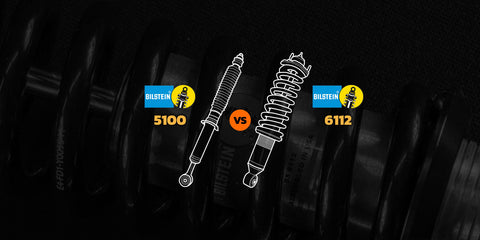
The 5100 carries its leaf-spring reputation onto a truck that no longer has leaf springs to lean on. Digressive valving firms up under load, which still makes it a controlled, confident daily upgrade — but the new multi-link rear asks more of the shock than the outgoing 3rd-gen truck ever did. Best treated as a factory-plus baseline, not a performance ceiling.
Shop Now → Read Our Full Review →
DesignMonotube (46mm)
Price Range$180 – $350
Road Comfort3 / 5
Haul & Tow4 / 5
Eibach builds the spring and the shock to work together rather than treating the shock as an afterthought, and that shows up as a more cohesive ride than the price suggests. The linear valving keeps small-bump compliance high on the new coil rear, and the spanner-adjustable height means you're not locked into one ride height. The most well-rounded daily-driver pick in this lineup.
Shop Now →
DesignMonotube Coilover
Price Range$750 – $1,000
Road Comfort4 / 5
Trail Comfort3 / 5
The 2.0 is the shock most people already know from the 4Runner, and it brings the same soft, forgiving character to the new Tacoma. That's a genuine strength for a truck that spends most of its life on pavement. It's a smaller ask for a bigger platform, though — the faster-moving rear end will find the limits of the 46mm body faster than it did on the old leaf-sprung truck.
Shop Now →
DesignMonotube / IFP
Price Range$550 – $750
Road Comfort4 / 5
Handling2 / 5
Bilstein's digressive curve was built for exactly the kind of stiffer, more demanding chassis the new Tacoma introduces — firming up as inputs get bigger instead of holding one static rate. Sold here as a full front 6112 coilover and rear 6100 shock kit, it's a legitimate coilover front end at a price that undercuts most of the field. The shock we point budget-conscious buyers toward first.
Shop Now → Read Our Full Review →
DesignMonotube Coilover (60mm)
Price Range$700 – $950
Handling4 / 5
Haul & Tow4 / 5
Same simple internal floating piston design as the 2.0, just in a bigger 60mm body with more oil to work with. That extra volume buys real heat capacity for sustained trail use, without the price jump of a remote reservoir setup. A straightforward upgrade for owners who want more shock without more complexity.
Shop Now →
DesignMonotube / IFP (60mm)
Price Range$950 – $1,250
Trail Comfort4 / 5
Road Comfort4 / 5
A genuine do-it-all shock for the new platform — composed on the highway, adjustable the moment the trail picks up. The DSC EVO dial lets you turn compression up or down without tools, which matters more here than it did on the old truck because the rear end now moves fast enough to actually notice the difference. The shock we point most serious trail owners toward.
Shop Now →
Design2.5" Remote Reservoir
Price Range$1,600 – $2,000
Handling4 / 5
High-Speed Off-Road4 / 5
King built its reputation on desert racing, and that pedigree matters more on the new Tacoma than it did on the leaf-sprung truck — the multi-link rear can finally move fast enough to ask a shock like this real questions. Reservoir capacity and compression adjustment mean it doesn't fade when the terrain gets sustained and rough. Best-in-class trail and high-speed off-road performance in this lineup.
Shop Now → Read Our Full Review →
Design2.5" Remote Reservoir
Price Range$2,200 – $2,800
Trail Comfort5 / 5 — Best
High-Speed Off-Road5 / 5 — Best
Icon's VS platform changes its damping curve based on shaft speed rather than relying on a single fixed valving strategy — in practice that means it stays composed over small stuff and firms up exactly when the new rear suspension starts moving fast. Sold as a complete Stage 1 kit with up to 3" of lift range, more headroom than King or Fox offer at this tier. The shock to cross-shop against King 2.5 before you decide.
Shop Now →
Design2.5" VS Coilover
Price Range$2,000 – $2,600
Trail Comfort5 / 5 — Best
High-Speed Off-Road5 / 5 — Best
This is the shock for owners who plan to actually use the extra suspension travel this platform's new rear end unlocks — big bore, internal bypass, remote DSC reservoir, compression and rebound both adjustable. It rides firmer at low speed than the 2.5-class shocks in this lineup, because that's not the job it's built for. Reserve this for genuine desert-speed driving, not the school run.
Shop Now →
Design3.0" Internal Bypass
Price Range$2,800 – $3,500
High-Speed Off-Road5 / 5 — Best
Road Comfort3 / 5
Live Valve reads the truck's motion and adjusts damping in real time rather than asking the driver to guess the right setting for the next mile of road. It's the only shock in this lineup that's genuinely comfortable unloaded on pavement and composed at speed in the dirt without a single manual adjustment. The one shock here that tries to do everything at once, and mostly delivers — at a price that reflects it.
Shop Now → Read Our Full Review →
Design3.2" Live Valve
Price Range$4,500+
Road Comfort5 / 5 — Best
High-Speed Off-Road5 / 5 — Best
Old Man Emu's internal bypass design uses zoned ports rather than a single fixed orifice, so the ride stays soft and forgiving through normal driving and only firms up as the shock nears the ends of its stroke. External compression and rebound adjusters let you fine-tune that behavior for your specific load. The shock we'd point a comfort-first overlander toward.
Shop Now → Read Our Full Review →
DesignInternal Bypass (51mm)
Price Range$1,800 – $2,200
Road Comfort5 / 5 — Best
Haul & Tow5 / 5 — Best
The MT64 skips the remote reservoir most premium shocks in this lineup lean on, instead relying on a genuinely large 64mm piston to manage heat and deliver real, usable wheel travel. The result is one of the most well-rounded rides in this guide — plush without being vague, capable without needing a reservoir hose routed through the engine bay. The shock we'd recommend to someone who wants premium ride quality without premium complexity.
Shop Now →
Design2.8" / 64mm Piston
Price Range$1,000 – $1,300
Road Comfort5 / 5 — Best
Trail Comfort4 / 5
Common Questions Frequently Asked Questions Straight answers before you buy
The biggest change is the rear end: the 3rd-gen Tacoma (2016-2023) used leaf springs, and the 2024+ truck moved to a multi-link coil rear suspension on a stiffer TNGA-F chassis. Leaf spring friction used to mask a lot of shock behavior — this platform doesn't have that crutch, so the shock itself has to do more of the work controlling ride and body motion.
No. The rear mounting points, travel, and valving needs are different from the leaf-spring 3rd-gen truck. Front IFS shocks are closer in concept but should still be confirmed against the new platform's specs before ordering.
It's fine for a mild daily driver, but the smaller 46mm body and linear valving don't have as much margin for the faster rear axle movement this platform introduces compared to the outgoing truck. If you plan to drive it loaded, towing, or on trail, look at the Fox 2.5 IFP or Bilstein 6112 instead.
Only if you're covering sustained rough terrain at speed. Reservoirs add heat capacity and recovery speed, which matters when a shock is working continuously - not for typical daily driving or occasional light trail use.
All three are remote-reservoir, 2.5-class coilover setups aimed at owners who want to use their truck aggressively. The Fox 2.5 Performance Elite is the most tunable on the fly with its DSC EVO dial. The King 2.5 leans hardest into comfort right out of the box. The Icon kit uses variable-speed valving that reacts to how hard you're pushing, with more lift range built in than the other two. Budget and how hard you plan to push the truck should decide which one you land on.
For most owners, no - it's the ceiling of this lineup in both capability and price. It earns its keep if you genuinely daily drive the truck, overland with it, and take it fast off-road all in the same week, since it adjusts damping in real time instead of asking you to compromise on one static setup. If your use case is more one-dimensional, a Fox 2.5 Performance Elite or King 2.5 gets you most of the benefit for a fraction of the cost.
Start with a budget, then move to use-case, then study the comparison chart above - its why we built it. Bilstein and Fox have numerous options each, neither of which compare to the BP51 and its rebound adjustment. Bilstein's 6112 is the most value packed option at the price that the other brands cant come close to.
A basic spacer lift can technically reuse factory shocks short-term, but the shock isn't valved for the new ride height or the reduced droop travel, and it'll wear faster and control worse. By using a spring or strut spacer, you rastically reduce droop/extension travel of the front end.