Dobinsons IMS Lift Kit Review for the 2024+ Ford Ranger: The Only Option (For Now) – Is It Worth It?
Posted by Sean Law-Bowman on
Introduction
In This Article
So the question becomes pretty simple: Do you grab the Dobinsons IMS kit now, or wait around for more brands to catch up?
We brought in a brand-new 2024 Ranger FX4, bolted on a full Dobinsons IMS setup, and put it through our usual mix of street, trail, and high-speed testing to find out.


Who is Dobinsons, and Why Should You Care?
Dobinsons is not some new boutique brand that just showed up on Instagram. They've been around for decades and are one of the largest coil spring manufacturers in Australia. Their reputation was built on springs first, then full suspension systems.
Their approach is holistic:
- Start with the springs
- Match shocks, valving, and travel around that
- Build for real-world load and off-road use
For the new Ranger, that philosophy shows up clearly in their IMS (Internal Monotube Shock) kits, which are designed as a complete system rather than just "slap some bigger shocks on and call it a day."


Dobinsons IMS Kit Overview for the 2024+ Ranger
The IMS kit for the new Ranger is built around:
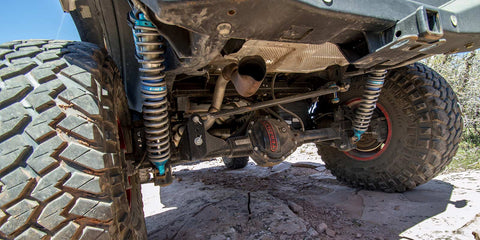
- Threaded-body front coilovers
- Multiple 2-inch lift spring options
- 55mm (2.2") shock bodies on this application
- Matching IMS rear shocks, optimized around their own leaf springs
Front Lift & Spring Options
Dobinsons gives you several coil spring options up front so you can match:
- Your driving style
- Your front-end weight
- Your desired ride firmness
Spring options generally include:
- Comfort Spec – Softer, more compliant for those who want a plush ride
- Standard/Medium – Sporty, tighter feel for enthusiasts (what we gravitate toward)
- Constant Load – For added front weight (bumpers, winches, accessories)
The beauty of this setup is that most of the lift comes from the springs, not crazy preload cranked into the coilovers. That means:
- Better ride quality
- More consistent performance under load
- The ability to fine-tune sag with a little extra preload as you add weight
Coilover Construction & Adjustability
On the Ranger, the IMS front coilovers use:
- 55mm (2.2") steel bodies
- A threaded design for ride height and preload adjustment
- Enough thread engagement to let you correct sag or add a bit of height without pulling the coilovers out
On some other platforms, Dobinsons steps up to a 2.6" body, but for midsize trucks like the Ranger and the kind of use these are optimized for, the 55mm body is a solid middle ground between performance and cost.
You can make minor preload adjustments with the coilovers still on the truck, which we absolutely appreciate from a tuning standpoint.
Spring Colors (Yes, It Matters)
Dobinsons coil springs come in a few flavors visually:
- Black
- Red
- Teal (their signature color)
We went with teal to rock Dobinsons unique brand color.


Rear Shocks, Leaf Springs, and Travel Gains
Out back, the IMS rear shocks are optimized around Dobinsons' own leaf springs. That's important.
We initially ran them with the stock leaf springs and discovered:
- The longer IMS shocks have more travel and more length than stock
- Compressed length is close enough to work with OEM leaves
- But you're not using all the travel the shock offers with the stock leaf pack
So yes, they technically work with stock leaf springs, but:
- Ride quality and control under load won't be as good as with the Dobinsons leafs
- You're leaving travel on the table
If you're buying this kit to really unlock capability, upgrading to the Dobinsons leaf springs is worth serious consideration.
Real Travel Gains
The big story here is length and travel.
Compared to stock:
- The front coilovers and rear shocks are roughly 1.5 inches longer
- Up front, that equates to well over 2 inches of additional wheel travel
- With Dobinsons leaf springs, you'd also get the full additional travel in the rear
Result: this Ranger starts to feel like a little flex monster, especially compared to the stock setup.

On-Road Impressions: Daily Driving with the Dobinsons IMS Kit
Most of you aren't driving your Ranger on dirt 100% of the time. So we put a bunch of street miles on the truck first.
Right away, the impressions were almost all positive:
Street Ride & Small Bump Compliance
- Small bump feel: very similar to stock (in a good way)
- You still feel the road, but you don't get beat up by it
- You don't lose road feel like you sometimes do with overly soft "performance" kits
Big Bumps, Driveways, and Speed Bumps
Where the IMS kit really shines:
- Hitting our shop driveway at twice the stock speed felt exponentially better
- Minimal drama, no harsh top-out or bottom-out
- Speed bumps and curbs become less of a "slow down and cringe" situation
That extra travel and better rebound control means you can:
- Carry more speed over obstacles
- Stay more composed
- Spend less time white-knuckling your steering wheel
Handling & Confidence
We ran the truck through a simulated slalom and emergency maneuvers:
- Turn-in is sharper
- Body roll is reduced
- Overall handling feels much more confident and predictable
Sean's take? "If you told me these were Bilsteins, I'd believe you." That's a big compliment from us in the handling department.
The ride is a bit on the firm side, which we like on this truck. If you prefer a softer ride or slower off-road pace, that's where the Comfort Spec springs might be a better call.

Off-Road Testing: Articulation, Trails, and Real-World Terrain
Once we were happy on the street, we headed to our usual test grounds to see how this Ranger performed off-road.
Hill Climbs & Articulation
We pointed the Ranger at a hill climb full of alternating holes perfect for testing:
- Articulation
- Traction
- Stability under load
Results:
- The truck flexed noticeably better than stock
- We saw minimal wheel lift and more tires staying planted
- Even on stock, small, street-oriented tires, the truck made it up climbs that a stock truck likely wouldn't
We did reach the articulation limit at one point and had to give it a little bump, but:
- The IMS suspension kept things controlled
- The climb went from "probably not happening stock" to "doable with some throttle and a little spin"
Descents and Rebound Control
On the way down, with most of the load on the front:
- The front suspension stayed surprisingly composed
- As the truck dropped through big holes, the rebound felt controlled, not bouncy
- You're not getting tossed around in the cabin, even when the terrain is trying to unsettle the truck
Sean's grade here: solid A. Not quite A+, but a huge improvement over stock, especially on stock tires.

"Frame Twister" Obstacle
We ran the Ranger through one of our favorite obstacles: the frame twister. Think: rutted-out, forest trail, rocks, holes, drop-offs, classic off-road trail chatter.
This is where compression and rebound tuning really matter:
- Compression needs to be compliant, so the truck isn't jarring
- Rebound needs to be controlled, so it doesn't pogo-stick
The Dobinsons IMS setup:
- Glided over rocks and holes with minimal harshness
- Kept the truck stable and relatively flat, even while we were moving around inside
- Held traction well, with all four tires staying in contact more often than not
Grade: another strong A. Not the cushiest setup we've ever tested, but way beyond what we expect from an "entry-to-intermediate" kit at this body size and price point.


Graded Dirt Roads & Washboard: Where Are These Shocks Happiest?
Next up: classic washboard fire road.
We tested the IMS kit at a range of speeds:
- ~10–15 mph: noticeable washboard, some vibration
- ~25–30 mph: starts to smooth out
- ~35–45 mph: feels really good
- ~50–60 mph: surprisingly composed, traction becomes the limiter, not the shocks
These shocks behave very similarly to a Bilstein-tuned package in this environment — they actually feel happier the faster you go.
If you're the type who likes to:
- Crawl at 5–10 mph on every dirt road, these may feel a bit firm
- Cruise at 35–60 mph to get to camp in a reasonable time, you're going to love them
On our graded road, with the stock all-terrains at high tire pressure, the limit was tire grip, not damper performance.
Grade: A. Another win.

Whoops Testing: Punching Above Their Weight
Now for the fun part: whoops.
Our test section:
- Whoops around 6–10 inches deep, about 2 feet apart
- Perfect scale for a midsize truck and this level of suspension
We gradually walked the speed up:
- First pass: up to ~40 mph by the end of the section — way better than expected
- Comparison: We've run Bilstein 6112/5160 on an F-150 through similar whoops and only reached ~35 mph
Despite being "just" a 2.2" bodied shock on this platform, the Dobinsons IMS kit:
- Stayed controlled at speeds we didn't expect
- Handled repeated hits without losing the truck
- Did eventually show a bit of fade on back-to-back high-speed passes
But to be fair:
- This is beyond what these shocks are designed for
- They still outperformed expectations by a big margin
Grade: A– for whoops — still an overachiever in this category for an "entry/intermediate" kit.
High-Speed Handling & Sideways Shenanigans
Because we can't help ourselves, we also tested:
- High-speed cornering
- Chicane transitions
- A little controlled sideways action
At 35–45 mph through a rolling left-right chicane:
- The truck felt neutral and predictable
- Braking rotation felt natural, not snappy or sketchy
- On-throttle, the truck dug in and drove out of the corner
Even when Sean intentionally overcooked a corner and induced understeer, the transition was:
- Progressive
- Easy to read
- Clearly a tire grip limitation, not a suspension tuning problem
Body roll is minimal, and what little roll there is, actually helps generate grip instead of feeling sloppy.
Grade: A+ for fun and control.

Final Thoughts: Should You Buy Dobinsons IMS for Your 2024+ Ranger or Wait?
Pros
- Big gains in travel and articulation
- Excellent on-road manners with sharper handling
- Strong performance on trails, hill climbs, and frame-twister-style terrain
- Very capable on graded dirt and washboard roads at speed
- Surprisingly competent in whoops for a non-reservoir, mid-body kit
- Serviceable design - you can rebuild and refresh instead of buying new shocks
Cons / Things to Consider
- The setup we tested is on the firmer side - If you prefer a plush, low-speed, slow-crawl ride, consider Comfort Spec springs
- To fully use the rear shock travel, you'll want the Dobinsons leaf springs
- If you're the "mach-Jesus through the desert" type, you may eventually want to step up to a higher-end reservoir system like Dobinsons MRR or other race-bred options once they hit the market
So… Should You Wait?
If your goal is:
- Baja-level speeds for long distances
- Full-on race truck driving all the time
Then, yeah, you might want to hold out for a higher-performing, more hardcore package once more brands release Ranger options.
But if you:
- Daily drive your Ranger
- Hit trails on weekends
- Want a predictable, confidence-inspiring truck
- Occasionally like to push the pace without blowing your shocks up
Then we don't think you need to wait.
Dobinsons IMS for the 2024+ Ranger is a killer entry-to-intermediate level system, built by enthusiasts, for enthusiasts that still have to drive to work every day.
Honestly, we were very surprised by how well it performed. It feels like what people imagine a Bilstein 5100 rides like, which is one of the best compliments we can give.