Durability vs. Longevity: Shock Lifespans Explained for Bilstein, Fox, King, Icon and others
Posted by Sean Law-Bowman on
In This Article
Introduction
If that sounds backwards, you're not alone. Let's break down why that is, how shock lifespans really work, and which route makes sense for your kind of driving.


Why High-Performance Shocks Need More Maintenance
The simple answer to "why do race shocks wear out faster?" comes down to the seal package, internal tolerances, and the intended use.
More "race-oriented" shocks — think Fox, King, Icon, and similar 2.5" and larger body options — use harder, higher-durometer seals and wear items, along with tighter internal tolerances. They're built to handle higher temperatures, bigger hits, higher shaft speeds, and repeated abuse without instantly giving up.
All of that is great when you're actually using them for off-road work. But those same harder seals and tight tolerances don't necessarily last longer if you're just cruising on the street. They're designed to be used hard and serviced regularly, not bolted on once and ignored for 150k miles.
Typical Service Intervals for Performance Shocks
From what we see in the real world on 2.5" and larger performance shocks, these ranges are pretty realistic:
- Street queens: ~40–50k miles
- Occasional mild trail use: ~30–40k miles
- Weekend warriors (regular moderate/hard trails): ~20–35k miles
- Aggressive off-roaders who still daily the rig: ~10–20k miles
- Race rigs / zero mechanical sympathy / only dirt miles: every 1–10k miles, or even every race
These aren't hard rules, but they're solid expectations.
Rebuild Costs & How We Help
High-end shocks are built to be rebuilt and refreshed instead of thrown away. That's one of their biggest advantages. At Shock Surplus, a typical rebuild is in the $150–$275 per shock range depending on the package, which is a lot cheaper than buying a new set of race-level shocks every time you wear them out.
We also try to soften the blow on the maintenance side. When you order a set of 2.5" and larger shocks from us, we offer $200 in future service credits for that first rebuild. If you're local to Southern California and hate downtime, we can even do same-day service: you drop the vehicle off in the morning, we pull the shocks, rebuild them, reinstall them, and you're driving home that afternoon on freshly serviced suspension.
If you want the details, hit the Shock Service page on ShockSurplus.com — you can see pricing, options, and book a rebuild or upgrade.
The main point: if a higher-performing, higher-maintenance set of shocks is right for you, we're doing what we can to make the maintenance piece less painful.


Why Entry-Level Shocks Can Last So Long (If You Drive Them Right)
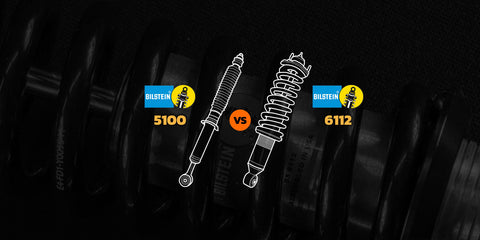
Most manufacturers know that extra maintenance is a non-starter for a lot of people. If you're just upgrading your daily driver, you don't want to rebuild shocks every couple of years. That's why more entry-level shocks and struts like Bilstein 5100s, Eibach Pro Truck Sports, and similar 2.0" and smaller body options are designed to be low maintenance and long lasting, as long as you stay within their intended use.
These "longer-lasting" options typically use softer seal materials, slightly looser tolerances, and simpler internal designs. When you're mostly on the road, hitting light dirt occasionally and not sending the truck off whoops every weekend, that combination means the shocks wear much more slowly.
For the average driver in normal use, it's very common to see 60–80k miles, and if you really take it easy, getting past 100k isn't unrealistic at all. The important part is baked into that phrase: "normal use cases" and "if you take it easy." That longevity goes out the window once you start abusing them like desert shocks.


The Trade-Off: Durability vs Longevity
This is where the paradox really shows up.
If your rig spends most of its time on the street, you only hit mellow dirt roads here and there, and you're not hammering whoops or rock gardens, then a basic 2.0" shock can be a perfect choice. They're affordable, comfortable, and they can last tens of thousands of miles with basically no attention.
But if you're regularly on serious trails, driving fast in the dirt, or stacking up a lot of off-pavement miles, those same "long life" shocks often won't meet your performance needs or survive your pace. They're simply not built to live at that level of abuse.
This is where the irony kicks in: for true enthusiasts, the more "race-oriented" shocks that people worry about servicing more often can actually last longer in practice, because they're engineered to handle the kind of use you're throwing at them and can be rebuilt when they wear.
We've seen plenty of people choose the low-maintenance option, hoping they'll last forever, only to discover they've turned them into paperweights within a year of real off-road use.
To make it less abstract, let's talk about some real-world examples from our own testing.


Real-World Examples from Our Testing
Example 1: Bronco on Bilstein 5100s
The first shocks we installed on my Bronco were Bilstein 5100s, which are some of the longest lasting shocks we carry when they're driven by the right person. They're inexpensive, they usually improve on-road ride, and they feel great on graded fire roads and simple trails.
On the Bronco, they started off exactly like that: ride quality improved on the street, and light off-road felt good. Then we took the truck to Johnson Valley. One of those dirt days went from "test day" to "let's see what happens," with some big hits, bump stops getting hammered, and more impact energy than a 5100 is designed to handle.
They still felt mostly okay on the way home, but within about 500 miles, it was obvious they were done. All in, they saw roughly 2,000 miles, only two real off-road days, and then they were candidates for retirement. That kind of failure isn't a warranty situation — they were pushed way beyond their intent — and since you can't rebuild them, that's around $550 gone in about a month of my style of driving.
For the right driver, 5100s will last for years. For someone driving like I do off-road, they're a short-lived experiment.


Example 2: Bronco on Fox 2.5 Performance Elites
Later, we upgraded the Bronco to Fox 2.5 Performance Elite coilovers, and the difference was immediate. The Fox 2.5s handled big hits without flinching, resisted fade when we stayed in the throttle on dirt, and generally transformed how the truck behaved everywhere from chop to whoops.
Whereas the Bilstein 5100s and the Eibach 2.0 coilovers we tested later would bottom out at the slightest provocation and start fading quickly when pushed, the Fox 2.5s took the hits in stride and seemed to invite more. I lost count of how many times the Bronco saw air on those shocks and how many times they pounded back into the ground, but after nearly 15,000 miles and almost a full year of abuse, they still felt tight and controlled.
When we finally disassembled them, there was some wear on the seal heads and internals, which is expected given what they went through. But considering how far beyond the limit I drove them at every opportunity, they held up incredibly well. With a straightforward service, they would easily be ready for another couple of years of the same nonsense.
Yes, the upfront price is higher and you do eventually need to rebuild them, but compared to burning through entry-level shocks at my pace, the performance option starts to look like the smarter financial choice too.
Matching Shocks to Drivers: Who Should Run What?
This is really what the whole conversation boils down to: pairing the right shock with the right person.
If you're mostly on pavement, your "off-road" is fire roads, light camping access, and the occasional mild trail, and you're not out there trying to set personal records in the whoops, then a basic package from Eibach, Bilstein, or similar brands is probably the best fit. These shocks will more than get the job done, keep your truck composed, and stay maintenance-free for years. When they eventually wear out, it will be far down the line, and they're inexpensive enough that buying a fresh set makes more sense than rebuilding.
On the other hand, if you're a genuine off-road enthusiast — even if you only push hard occasionally — you're often better off with the durability and serviceability of higher-performing, more race-oriented dampers. They're more expensive upfront and technically higher maintenance, but they're designed to survive more abuse and can be repaired and brought back to life once they finally show their age.


Shocks That Do Both: Durability and Longevity
I've probably made it sound like durability and longevity are mutually exclusive, but there are a few shock lines that manage to offer a lot of both. They still aren't cheap, but you get a blend of performance, service life, and rebuildability that's pretty hard to beat.
OME BP-51 & MT64
At the top of Old Man Emu's range, the BP-51s are a classic "ultimate overlander" shock. They use an internal bypass design for plush, position-sensitive tuning, have independent compression and rebound adjustment in the main ride zone, and run very compliant base valving. We've heard reports of sets going past 75k miles, and while we can't independently verify those numbers, we ran them on our Tacoma for a couple of years without a hiccup. They're not our top pick for big high-speed senders, but for people who spend a lot of time in the dirt at reasonable speeds and want comfort, they're a very strong option.
More recently, OME released the MT64 line, which sits in the middle of their range and, in our opinion, is probably the sweet spot for a lot of trail and overland-focused builds. They're a bit more expensive than the Bilstein 6100 and 6112 kits they compete with, but you get a larger 64mm piston, a hydraulic rebound end zone to resist harsh top-out events, and anodized aluminum bodies that hold up better to corrosion. They haven't been around long enough for us to have long-term longevity data, but on paper and in testing so far, they look like they may actually outlast the BP51s thanks to a simpler, robust design. OME also now offers in-house rebuilds for both BP-51 and MT64, which is a big plus.


Dobinsons MRR
The Dobinsons MRR line is another high-end, trail-oriented suspension system that offers a very plush ride and impressive service life. They feature dual-speed compression and rebound adjustment, which makes them some of the most tunable shocks in the off-road space. Rebound adjustment, especially, is something you don't see very often in this category, and pairing that with DSC is a big win.
Many applications use a 50mm piston, and some lucky platforms get their big 60mm piston, making those versions particularly attractive for people who want to hit serious trails or knock down a lot of off-road miles at realistic speeds. We've heard reports of people getting well over 60k miles with lots of hard trail days before needing a rebuild. While we can't personally stamp those numbers, we do know they use high-quality Japanese NOK seals that are known to last. Dobinsons does solid rebuild work on their shocks, and we can service them just as easily as Fox, King, or Icon for similar money.


Bilstein 8112 & 8100
We have sets out in the world — including our own — that have been hammered on for years with very little mercy, and they're still going strong aside from occasional bushing and bearing changes. They last so long that Bilstein doesn't really have a concrete service interval for them; their basic stance is "let us know when someone finally manages to burn a set down," and so far that hasn't really happened.
These are the only shocks we've seen that can take genuine race levels of abuse and still last as long or longer than many of the brand's basic offerings on grandpa's daily driver. When they do eventually decide they've had enough, they're just as easy for us to rebuild as anything else we service.
The downside is price. A full set of 8112s and 8100s will usually land in the $4100–$5700 range, depending on the vehicle. They're more expensive than similar-sized competition, no question — but in our opinion, they're worth every penny if you want that blend of performance, longevity, and virtually unmatched durability.