Old Man Emu BP-51 Coilover & Shocks Review - Toyota Tacoma
Posted by Sean Reyes on
Baseline
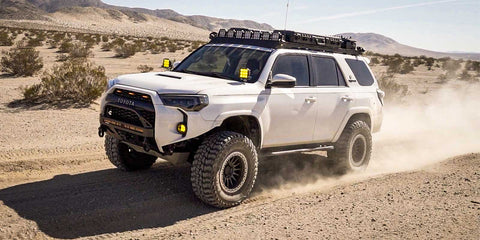
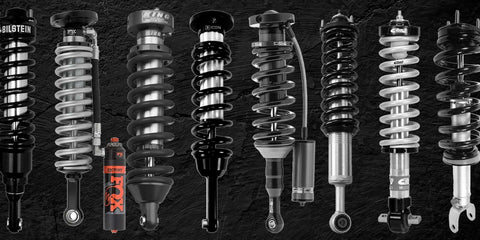
The baseline for this review is 270,000 miles on the Tacoma, and 5 different shock absorber types.


Clear Winner
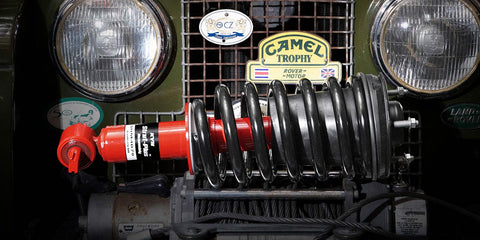
After debating between the Fox 2.5 DSC, King 2.5, Bilstein 6112, and BIlstein 8100, we settled on the Old Man Emu BP-51 Internal Bypass setup, featuring compression and rebound settings for the front and rear, mixed with their internal bypass technology. This is a ‘first’ in the light truck and Jeep market, no manufacturer has combined all these features into a single setup. Through the ingenuity at ARB and OME, they were able to provide a decent sized internal 51mm piston, internal bypass for optimal ride comfort in the easy stuff, while allowing fine tune adjustments to vehicle control through compression and rebound damping adjustment. Bilstein’s 8100 external bypass series are close to these features, and even excel at certain aspects, but they do not feature adjustability or bypass for the front coilover setups on the Toyotas.
BP-51 Internal Bypass - While most shock absorbers only generate damping based on fluid flowing through the piston, the BP-51 offers an alternative path from one chamber to the other, around the piston in the form of bypass passages. Some fluid flows through the piston and some fluid bypasses around the piston in the bypass passages. This results in an ability for the shock absorber to provide the best of both worlds, with a comfortable and compliant ride during normal driving and a more controlled ride over more challenging terrain.
While the feature list is mouthful, all those specs and options play a significant part in ride control dynamics and vehicle behavior, IF that’s something you’re after! Most of what we’re going to get into here is nit-picking and shock nerd-talk. But straight off the bat, these are some of the most comfortable shocks we’ve equipped on the Tacoma.


Highway Comfort & Control
A lot of our customers are looking for a smooth buttery ride, but often dont understand that there are tradeoffs there. The BP-51 shocks can be setup for that creamy soft feel on the highway, but that can also result in poor handling where the vehicle can easily be destabilized. There’s a fine balance you can achieve to mix the comfortable ride with good handling, our trucks with lots of gear, dont like too soft of a setup.
A poor combination of low compression and high rebound settings can result in dramatic changes in vehicle control if you don't know what to watch out for.
I attribute the soft and compliant road ride to the internal bypass feature, absorbing all the regular small abnormalities of the pavement without much feedback to the driver, while providing adequate handling through turns, driveways, and maneuvers. The changing of the compression settings will make noticeable differences to how the vehicle will handle, so its up to you the driver on what you want that to be.
Off-Road Performance
One of the baselines I was looking to achieve with the BP-51 shocks was how the ICON setup handled medium-high speed desert terrain, which could be categorized as non-aggressive, predictable, visible, and in the range of 30-50mph. It took setting the (front) compression levels in the medium-high (6-7) range, with the Rebound in the medium (5-6) range, in order to allow the front suspension to work well enough to take the unexpected big changes in terrain, while not being uncomfortable. The rear required near-maxxed out compression levels, with a medium-high rebound setting in order for the shocks not to top and bottom out on the same terrain.
Having to play with the settings in order to dial in this behavior, made me appreciate the ICON setup in high speed environments. The ICON with CDCV adjustment wasn’t able to go as soft as the BP-51 on the same vehicle, so there’s a big advantage there with Old Man Emu shock offering.


BP-51 Advantages
Where the BP-51 Shines
- Best suited for slower trail speeds (under 20–30 mph) with rocks, roots, and unpredictable obstacles
- The internal bypass is the most underrated feature - it lets the piston "float" through mid-range movement, which pays off in noticeably smoother everyday road feel
Dial-In Comfort on the Trail
- Ride quality on slow, mountainous terrain improved noticeably
- With the right compression and rebound settings, you can consistently achieve a "plush" feel over obstacles - something that used to happen by accident
- Optimal settings vary widely depending on your vehicle and load (bumpers, camper shell, roof rack, rooftop tent, gear weight all factor in)
Washboard Performance
- Washboard handling and comfort improved significantly
- Most vehicles struggle with rear-end sway or swerving through washboard sections - rapid wheel oscillation makes it hard for standard dampers to maintain contact
- Proper rebound tuning addresses this directly and makes a noticeable difference
Body Roll and Rock Garden Control
- Body roll over large rocks and hard obstacles is better managed with the BP-51 setup
- A loaded vehicle dramatically increases body roll - good suspension damping is the difference between scrapes and clearing obstacles cleanly
- The Icon setup previously run felt harsh in slow technical terrain; the BP-51 is more forgiving without sacrificing roll control
Bottom Line
- These adjustments matter most if you care deeply about ride quality during multi-day off-road trips - that's where the BP-51 earns its price
- Best shocks we've run? Yes. Best shocks for everyone? No - driver needs and ride preferences vary too much to make a blanket recommendation
Compression Damping Troubleshooting
| Symptom | Remedy |
|---|---|
| Bottoms out easily on large bumps | Increase compression damping |
| Suspension feels harsh and does not soak up small bumps | Decrease compression damping |
| Shock Absorber rarely bottoms out, even off big drop offs | Decrease compression damping |
| Shock Absorber is not using all of its available travel | Decrease compression damping |
Rebound Damping Troubleshooting
| Symptom | Remedy |
|---|---|
| Vehicle bounces and carries on repeatedly after larger bumps | Increase rebound damping |
| Suspension tops out too hard | Increase rebound damping |
| Wheels lose traction on gravel corners with corrugated surfaces (washboard) | Decrease rebound damping |
| Suspension feels harsh | Decrease rebound damping |
| Packing in repetitive bumps | Decrease rebound damping |
| Loss of traction when braking or accelerating on corrugations (washboard) | Decrease rebound damping |