2022+ Toyota Tundra Suspension Buyer's Guide Part 3: Best Intermediate Shocks
Posted by Sean Law-Bowman on
Before You Start: TRD Pro and AVS Owners
We're right in the middle of this series, so if you haven't already, get caught up on the earlier parts first.
Part 1 covers the differences between the factory suspension systems, when and why you need to upgrade your upper control arms, drop your diff, or upgrade your axle shafts, and tire clearance. All of that is stuff you'll want to know before reading this one.
The two most important takeaways:
- If you have a TRD Pro, wait for Part 4. The factory Fox 2.5 Internal Bypass shocks on the TRD Pro are a darn good set of shocks. Everything in this article performs great, but it isn't on that level.
- If you have AVS, be prepared to convert away from it. Nothing good works with AVS besides preload spacer kits, and as we covered in Part 1, those are junk.

Why Intermediate Is the Sweet Spot
If you're coming over from Part 2, where we covered the more basic options, it's probably because we kept hamfistedly hinting that the intermediate options are the better overall value and the real sweet spot for most drivers.
The packages in Part 2 work, to say the least. Everything in this batch doesn't just work. It works pretty darn well, without much of a price penalty.
In fact, they work so well that most people are happy to keep these parts through their full service life and then some before upgrading further. That can't be said for the lesser parts.
It's inherently cheaper to buy once and cry once than to fail your way to the ideal upgrade. So if you're reading this, give yourself a pat on the back for already being on the right track.
Enough of the fluff. Let's get to the good stuff.

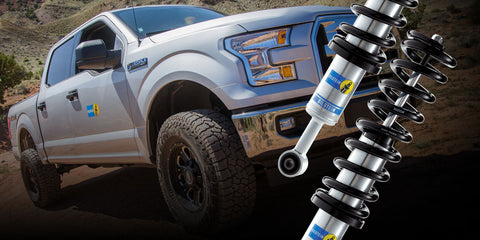
Bilstein 6112 & 6100
By far the cheapest option on today's list is the Bilstein 6112 front and 6100 rear combo. They also happen to be the longest lasting. It isn't uncommon for them to still be working well at and beyond the 100,000-mile mark. They aren't rebuildable, but they'll last as long as a lot of people keep their trucks anyway.
Price and What You Get
This is the crazy part. For about $1,400, which is less than many of the entry-level options from Part 2, you get:
- A 2.6″ body front strut, assembled at your desired lift height from stock to around 2 ¼″, with settings for extra load
- A 2.6″ body rear shock that can take about 1.5″ of lift with an aftermarket spring
Here's the kicker: no other parts are required. These can be your complete system. That said, if you plan on finding their limits, an aftermarket upper control arm is a good idea, to say the least.
How They Perform
In our testing we were clicking around 50–55 mph through small whoops on our test track with nothing more than these shocks, some Icon springs, and upper control arms. That's mind-blowing for the price.
As will be the theme for everything in this article, you can get them to fade since they don't have reservoirs. But you can have a whole lot of high-speed fun before that happens.
The Catch: A Firm Ride
Their simplicity is as much a detriment as a benefit. Because they're optimized around stock control arms and not hurting the base-model black axle shafts, they're a little limited in travel.
To keep you from topping out at the higher settings, Bilstein tunes them pretty firm on rebound, and honestly pretty firm all around. They weren't constantly topping out like some of the lesser options, and they were nice and smooth on the road, but they felt almost too stiff at lower speeds off-road. I love a stiff setup more than most, and these were at the edge of what I'd call acceptable. If you spend a lot of time going slow over chunky terrain, they may be too much.
Best Under Load
They are inarguably the best under load of anything we tested in this tier, and that's with only the standard-load rear shocks. Jeff has had enough weight in the back of the truck to technically need the HD-spec rears and never felt like he needed anything stiffer.
Who They're For
Not our choice for low-speed unloaded wheeling. But if you like to go fast off-road, deal with a lot of towing, hauling, or constant load, and don't want to spend a lot up front or on rebuilds, these are a real winner.
Money-saving tip: If you aren't doing any serious off-road driving and mostly tow or haul, spec the Bilstein 5100 rear shocks instead of the 6100s. You'll save more money without losing much on-road comfort.

Bilstein
6112 / 6100
2022+ Toyota Tundra
Need help picking a lift height or load setting? Call us at (213) 433-3616.

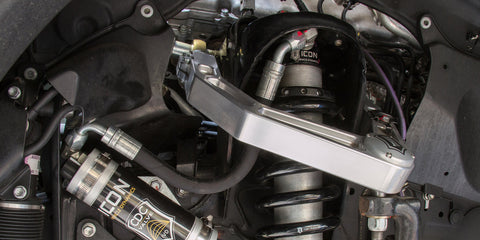
Icon 2.5 EXP
Icon's 2.5 EXP kits will probably make you work the hardest of any option here to get them installed. But they definitely reward you for it.
What the Install Involves
- The front struts don't come assembled. You'll need to disassemble your stock struts and move the springs and other parts over.
- You'll need to trim the lower control arm pocket for lower mount clearance.
- You'll need to space out your sway bar, and your skid plate if you have the TRD aluminum skid.
- If you don't have the TRD Pro or TRD Off-Road package, you'll need to drop your diff.
- Honestly, you should be getting aftermarket upper control arms with them too.
You can get into the Stage 1 kit for about $1,500, but we think going to Stage 2 to get Icon's control arms is the way to go.
Why the Extra Work Pays Off
All of that is required because these offer so much more travel than stock. That's also the big secret to why they ride so much more comfortably than the Bilsteins or anything from Part 2.
The extra down travel means they don't have to be as stiff on rebound to keep you from topping out. And because they can be set to as much as 3″ of lift, they have more up travel and don't need to be as stiff on compression either.
The result: the front end is more comfortable than the Bilstein on smaller, lower-speed hits, and harder to bottom out on the bigger hits, without giving up much handling compared to those razor-sharp 6112s. The extra travel really shows on technical terrain too, where you're far less likely to lift a tire.
The Downsides
The rear shock. The rear only comes with a 2″ body shock without a reservoir. It's plenty comfortable unloaded and stable under load, but it was a big limitation over bigger hits, especially at speed.
We don't normally recommend mixing and matching, but a lot of our customers have had success running Bilstein 6100s in the rear for more balanced performance at similar money. Still, most people would probably take the extra comfort and articulation of the Icons over the high-speed performance of the Bilsteins either way.
The front springs. You're pigeonholed into stock springs, or at least stock-taper springs. If you add enough weight over the front axle from something like a bumper and winch, you may not be able to go stiffer.
Service life. This is arguably the biggest downside. Icon has made huge leaps in quality and is more reliable than a lot of other brands, but you'll only get around 40,000 miles before they need a rebuild. The good news: almost anyone who rebuilds shocks rebuilds Icons, and seals, bearings, bushings, and other service parts are easy to get.
Stage 4 and Stage 5: Options for Heavier Builds
If the 2.5 EXP kits sound right but you might need help with extra weight up front, Icon has two step-up options:
- Stage 4 swaps in Icon's 2.5 IR threaded-body coilovers. They offer finer and more total preload adjustment, and they use flat-ground universal springs, so if the adjustment isn't enough you can easily get a stiffer spring from a number of brands, Icon included.
- Stage 5 adds a reservoir to the 2.0 rear shocks for a more consistent feel on longer off-road trips.
Before you make that call, read on. The next two shocks might have a better solution for added weight.
Who They're For
If you can get past the install headache and the service interval, these could make a whole lot of people very happy, especially if comfort and articulation are your priorities.

Icon Vehicle Dynamics
2.5 EXP
2022+ Toyota Tundra
Not sure which stage fits your build? Call us at (213) 433-3616.

OME MT64
As you're probably catching onto, the more travel something has, the more we like it. The OME MT64 is the perfect example. I'll say it right now: these were our absolute favorite option of everything in this article, and a lot of that comes down to them having the most travel.
What You'll Need
All that travel means you really need upper control arms. And if you don't have the factory red axle shafts, you'll need to either upgrade your axles or drop the diff. Those parts are absolutely worth the comfort and performance.
How They Ride
They were pillowy soft on the road and at lower speeds off-road. All that extra travel meant they could take a surprising amount of high-speed shenanigans, while offering spectacular articulation on the technical stuff.
Like everything else on this list, the lack of a reservoir means you can get them to fade eventually. Just like the Bilsteins, we had a lot of fun before we noticed any loss in performance, and these recovered nearly instantly.
The secondary top-out piston worked so seamlessly we forgot it was there. What we couldn't get over was how rarely we felt a harsh top-out, which means it was definitely working, because that truck caught some air.
That's probably part of why they were essentially unflappable on washboard roads at any speed. The Bilsteins can punish you at lower speeds, and something like the Eibach Stage 2 kit from Part 2 can get floaty at higher speeds. These just flat-out work no matter how fast you drive.
Under Load, and Built to Grow With Your Truck
They were right there with the Bilsteins under load, staying stable and composed even when total load exceeded the 440 lb listed maximum of the included rear springs. But the front is the more interesting half.
OME sets up the front with springs that give about 3″ of lift on a stock-weight truck at the standard setting, then provides additional settings to compensate for up to about 330 lbs of added weight.
That makes this one of the few times you can buy your complete suspension at stock weight, then add your bumper, winch, skid plates, and everything else without changing anything but the circlip setting on the front struts.
OME bases those settings on the sag from parent company ARB's bumpers, skid plates, and so on. If you go with somebody else's armor, your final ride height might vary slightly, but not having to buy more parts to compensate for added weight is hard to ignore.
Service Life
They haven't been around long enough to know for sure how long they last. But OME is known for long-lasting products, and we'd argue these are the most robust design in their catalog. We wouldn't be surprised if they go at least 80,000 miles.
Based on OME's videos and the parts themselves, they look pretty easy to rebuild. Seal kits weren't readily available when we recorded this, but we wouldn't be surprised if a rebuilder outside of OME starts servicing them eventually. Either way, it'll be a long time before that's a problem for most buyers.
Our Two Complaints
Both come down to ride height:
- Minimum lift. A stock-weight Tundra can't really get below about 2.5–3″ of lift with these. That's no big deal for us and a worthwhile compromise for how they perform, but it might be a no-go for a lot of people.
- Rear body roll. Not a huge complaint, but there seemed to be a little more body roll in the rear than with the other options. That could have as much to do with the truck sitting about an inch taller than it did on the other setups. A track bar relocation, which is a good idea either way, would probably help.
Price
These aren't the cheapest option, but we'd argue the comfort and performance exceed their price point, and they're not far outside most people's budgets:
- $2,400 for loaded front coilovers and rear shocks
- $2,600 with rear springs
- $3,300 with OME's upper control arms

Old Man Emu
MT64
2022+ Toyota Tundra
Planning armor or a winch down the road? Call us at (213) 433-3616 and we'll help you pick the right setting.

Dobinsons IMS
After gassing up the OMEs that much, it's hard to see a reason to mention anything else. But the Dobinsons IMS solves some of our minor complaints with the MT64 without much compromise.
How They Compare to the MT64
They're a 2.6″ body like the Bilsteins, so a tad smaller than the MT64, but not far off in outright performance, longevity, or even travel.
- Where they fall short: They aren't quite as plush, especially on washboard roads at lower speeds. Without a secondary top-out piston, you can still feel them top out a bit.
- Where they win: They handle much better and have far more flexibility in ride height and preload adjustment.
Ride Height and Spring Options
Like the OMEs, the springs do most of the lifting, and the preload adjustment is there to offset added weight as your build grows. But Dobinsons offers far more spring options front and rear, and the front coilovers are threaded-body, so you get practically infinite adjustment within the set range.
Most importantly, stock-weight trucks can go as low as 2″ of front lift or potentially less. That doesn't sound like much, but it makes them viable for a lot more people, while still reaching the same 3″ as the OMEs at the top setting.
Long-Travel Rear Option for Crawlers
Dobinsons also offers long-travel rear shocks with something like a full 12″ of travel for anyone who wants the most articulation possible. To use all of it, you'll need:
- A 1.5–2″ bump stop spacer
- Longer brake lines
- Upgraded rear links
The lost bump travel doesn't make them ideal for going fast, and that isn't what they're for. They're the ultimate choice for those of you who test your limits on difficult terrain rather than by going faster.
Service Life
Dobinsons keeps seals and oil readily available. Not many shops advertise that they service these, but if you can get them the seals and oil, chances are they can get it done. With a 60,000–80,000-mile service life, you get the best of both worlds.
Who They're For
We won't call them the absolute jack of all trades, and they're definitely not master of none. They're a jack of most trades and master of many of those. With pricing on par with the OME and the option to run less lift, they're a spectacular alternative to our personal favorite.
Considering the Dobinsons IMS? Call us at (213) 433-3616.
Intermediate Tundra Shock Comparison Chart
| Shock / Kit | Starting Price | Front Lift Range | Ride Feel | Under Load | Extra Parts Needed | Service Life | Best For |
|---|---|---|---|---|---|---|---|
| Bilstein 6112 / 6100 | ~$1,400 | Stock to ~2 ¼″ (rear up to ~1.5″ with aftermarket spring) | Firm all around; smooth on road, stiff at low speed on chunky terrain; best handling | Best in this tier | None required; UCAs recommended if you push them | 100,000+ miles; not rebuildable | Going fast, towing and hauling, constant load, lowest long-term cost |
| Icon 2.5 EXP | ~$1,500 (Stage 1); Stage 2 recommended | Up to 3″ | Comfortable on small and low-speed hits, resists bottoming; 2.0 rear limits high-speed | Stable; stock-taper front springs limit added front weight | Strut assembly, LCA trimming, sway bar/skid spacing, diff drop (non-TRD OR/Pro), UCAs | ~40,000 miles; widely rebuildable | Comfort and articulation-first builds willing to install and service |
| OME MT64 | $2,400 / $2,600 w/ rear springs / $3,300 w/ UCAs | ~2.5–3″ minimum on stock weight; settings for up to ~330 lbs added | Pillowy soft; unflappable on washboard; slight rear body roll | On par with Bilstein | UCAs; diff drop or axles without factory red axle shafts | Est. 80,000+ miles; seal kits not yet widely available | Our favorite: all-around comfort and speed, builds that will add armor later |
| Dobinsons IMS | Similar to OME MT64 | ~2″ (or less) to 3″; threaded-body front | Not quite as plush as MT64; can feel top-out; handles much better | Stable; most spring options front and rear | Not covered in video ; long-travel rear needs bump stop spacer, brake lines, rear links | 60,000–80,000 miles; seals and oil readily available | Less lift than MT64, better handling, slow technical crawling (long-travel rear) |
The Trade-Offs at a Glance
Every option here comes with some compromise. Pick the right one and those compromises either won't matter for your needs or will be worth it for what you get.
- Bilstein 6112 / 6100: Impossibly cheap for what you get, handle the best, last the longest, and are the most stable under load. But they're very stiff riding, especially at low speed on chunky terrain, they don't add much travel over stock, and since they aren't rebuildable you'll pay full price for a new set when they finally wear out.
- Icon 2.5 EXP: Ride great in most areas, tow well, and handle almost as well as the Bilsteins. But they have a short service life, and the 2″ body rear shock at this level is a real limitation.
- OME MT64: Ride like a dream, are a ton of fun at speed off-road, and feel at least as good as the Icons under load in a straight line. But they're a little wobbly in the handling department and force you into more lift than many people want.
- Dobinsons IMS: Let you run less lift than the OMEs. But in some conditions the ride is good rather than great, not as comfortable as the Icons can be, and not nearly as fun at speed as the Bilsteins, let alone the OMEs.
And none of these can handle more than a few minutes of serious abuse before needing a break.

Which One Is Right for You?
- You want the most performance for the least money, go fast off-road, or tow and haul a lot: Bilstein 6112 / 6100. If you're mostly towing and not wheeling, spec 5100 rears to save more.
- You want maximum comfort and articulation and don't mind a harder install and rebuilds every ~40k miles: Icon 2.5 EXP Stage 2. Consider Bilstein 6100 rears, or Stage 4/5 if you're adding front weight or doing long trips.
- You want the best all-around ride and you're fine with 2.5–3″ of lift: OME MT64. Our favorite, and it grows with your build.
- You like the MT64 but want less lift, sharper handling, or more spring options: Dobinsons IMS.
- You crawl hard terrain and want the most rear articulation possible: Dobinsons IMS with the long-travel rear shocks and supporting parts.
- You have a TRD Pro, or you need sustained hard driving without breaks: Wait for Part 4.
Frequently Asked Questions
The OME MT64 was our favorite of everything we tested in this tier. It has the most travel, rides soft on the road and at low speed, takes a surprising amount of high-speed abuse, and stays stable under load. If you want less lift than the roughly 2.5 to 3 inches the MT64 forces on a stock-weight truck, the Dobinsons IMS is the closest alternative at the same price.
For the money, they are hard to beat. At around $1,400 they are the cheapest option in this tier, they handle the best, they are the most stable under load, and they commonly last 100,000 miles or more. The trade-off is a firm ride, especially at low speed on chunky terrain, limited travel over stock, and they are not rebuildable.
No other parts are required. The 6112 front struts and 6100 rear shocks can be your complete system. If you plan on finding their limits off-road, an aftermarket upper control arm is still a good idea. Our test truck ran them with Icon springs and upper control arms.
The front struts come unassembled, so you transfer your stock springs and hardware onto them. You also need to trim the lower control arm pocket for lower mount clearance, space out the sway bar and the TRD aluminum skid plate if equipped, and drop the differential if your truck is not a TRD Pro or TRD Off-Road. We also recommend aftermarket upper control arms, which is why we suggest Icon's Stage 2 kit over Stage 1.
Expect around 40,000 miles before they need to be rebuilt. The good news is that almost every shock rebuilder services Icon, and seals, bearings, bushings, and other service parts are easy to get.
On a stock-weight Tundra, the MT64 front springs deliver about 3 inches of lift at the standard setting, and you realistically cannot get below about 2.5 to 3 inches. Additional circlip settings compensate for up to roughly 330 lbs of added front weight, such as a bumper, winch, and skid plates, so you can keep the same kit as your build grows.
The MT64 is plusher, especially on washboard roads, and its secondary top-out piston nearly eliminates harsh top-outs. The Dobinsons IMS handles better, can run as low as about 2 inches of front lift on a stock-weight truck, offers more spring options and threaded-body preload adjustment, and has a long-travel rear option for crawling. Pricing is about the same, so the choice comes down to ride height and how you drive.
Yes, eventually. None of the four options here have reservoirs, so all of them can fade after a few minutes of serious abuse. In our testing, the Bilsteins and OMEs delivered a lot of high-speed fun before any noticeable fade, and the OMEs recovered almost instantly. If you need sustained hard driving without breaks, the high-end options in Part 4 are where to look.
Probably not. The factory Fox 2.5 internal bypass shocks on the TRD Pro are a step above everything in this tier, so TRD Pro owners should wait for Part 4. Trucks with AVS adaptive suspension need to be converted away from it, because nothing good works with AVS besides preload spacer kits, which we do not recommend.

What's Next in the Series
All of these options will probably tick the most critical boxes for most people. But if you want to spend the money to avoid most of those sacrifices, Part 4 is for you. We're covering the high-end options that give you all the performance most anybody could ask for, and in many cases more, with little to no compromise.
We guarantee the shocks in the next one get a little wild.
In the meantime, tell us in the comments on the video: which option are you going with on your Tundra?
Series so far:
- Part 1: Factory Systems & Setup
- Part 2: Entry-Level Shocks & Leveling Kits
- Part 3: Intermediate Shocks (you are here)
- Part 4: High-End Shocks (coming soon)
Ready to Upgrade Your Tundra?
Interested in any of the shocks we covered today, for your Tundra or whatever else you're whipping? Shock Surplus is your one-stop shop.
Shop All 3rd Gen Tundra Lift Kits
Phone: (213) 433-3616