Eibach Stage 3R Review: 2015+ Ford F-150 Lift Kit
Posted by Sean Law-Bowman on
In This Article
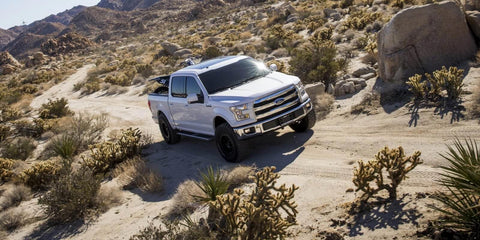
We ran preproduction parts on our F-150 to help with development, and we're now on the production kit. In this review, Sean Bowman covers what's in the Stage 3R kit, how it rides on the street, how it handled washboard, chunky trails, and high-speed dirt, and whether it really beats the competiton Bilstein 6112s that Eibach built it to beat.


What Is the Eibach Stage 3R?
The Stage 3R kits are currently the pinnacle of performance in the Eibach catalog. They're designed to be the sweet spot in both real-world performance and feel for how most people actually use their vehicles.
Applications are still fairly limited. The only parts officially in production or confirmed for production are for 2015+ F-150s, like the kit we tested, and the Land Cruiser 250. Here's where things stand:
Eibach Stage 3R Applications
| Vehicle | Status |
|---|---|
| 2015+ Ford F-150 | In production or confirmed for production (the kit in this review) |
| Toyota Land Cruiser 250 | In production or confirmed for production |
| 6th Gen 4Runner, 4th Gen Tacoma, 3rd Gen Tundra | Expected to follow, since the LC250 shares its platform with pretty much every other current 4WD Toyota. Not confirmed. |
| 5th Gen 4Runner | Eibach is close to a release, which should mean kits for other legacy Toyotas too. Not confirmed. |
There are a lot more applications to come, but we can't confirm a release schedule on anything right now.

Eibach
Pro-Truck Stage 3R Lift Kit
2015-2026 Ford F-150

What's in the F-150 Kit
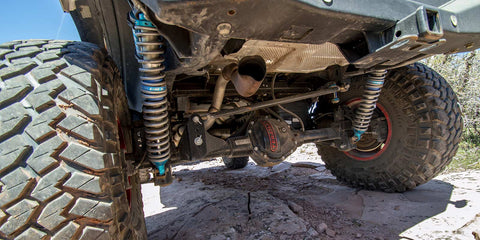
For the F-150, the Stage 3R kit includes loaded 2.5" body coilovers without reservoirs in the front and 2.5" body piggyback reservoir shocks in the rear. Some other applications may get a remote reservoir in the rear for the sake of packaging.
Eibach Stage 3R for the 2015+ F-150 at a Glance
| Component | What It Is | Key Specs |
|---|---|---|
| Front | Loaded 2.5" body coilovers, no reservoir | Preassembled with a threaded body; adjustable from around 1" to 3" of lift with the included springs |
| Front springs | 500 lb, 3.0"/3.5" tapered, flat ground | Stiffer and softer rates available from Eibach |
| Rear | 2.5" body piggyback reservoir shocks | Works with at least 2" of rear lift on a base 4WD truck; fits the Tremor without losing travel |
| Construction | Steel bodies, front and rear | Zinc plated, then Cerakoted for corrosion resistance |
| Ride height adjustment | Threaded collar, adjustable on the truck | 1/8" of ride height per full turn |

Why There's a Reservoir in the Rear but Not the Front
Normally we'd say that if you need a reservoir in the rear, you probably need one in the front too, at least when it comes to heat dissipation. In this case, though, the reservoir allows for better travel lengths. That makes these one of the few options you can put on a Tremor without losing travel.
That extra travel means the rear shocks work with at least 2" of lift on a base 4WD truck. It also means the shocks extend further than the stock leaf springs do. That makes the install a little rougher than some other rear shocks, but it also means you're covered for the vast majority of upgraded leaf packs, which is something these trucks definitely benefit from.
One of the final changes between the prototypes we ran earlier and the production parts on the truck now is that Eibach bumped the length of the rear shocks as far as they could. More on what that did in the off-road section.
Steel Bodies with Cerakote
All of these shocks use steel bodies that are zinc plated and then Cerakoted for the utmost in corrosion resistance. We adjusted our front coilovers more than a few times and saw no signs of the Cerakote being damaged around the threads. If anything, we think the Cerakote might have made the adjustment a little easier.
Eibach
Pro-Truck Stage 3R Lift Kit
2015-2026 Ford F-150


Lift Range & Ride Height Adjustment
Because the front coilovers use a threaded steel body, you can adjust ride height after they're installed. Just get the front end up on jack stands first.
Adjustment range varies by application. On these F-150s, you can set the front anywhere from around 1" to 3" of lift with the included springs. Eibach says each thread, or one full turn of the adjustment collar, equals 1/8" of ride height change. We can confidently say that's 100% accurate.
We ended up running ours at around 2" to 2.5" of lift in the front. That feels like a really good compromise: you get a more level stance and a touch more bump travel, and you still have enough droop for a very nice ride and decent articulation.


The Benchmark: Bilstein 6112, 5160 & 8100
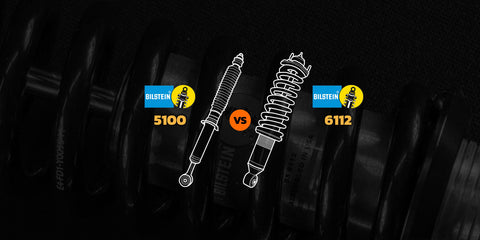
Eibach first showed us these 2.5s on a factory tour four or five years ago. When they told us the kits were finally coming out, they were upfront about the goal: knock the Bilstein 6112s and 5160s out of the water. So we're using the Bilsteins as the baseline throughout this review.
If you know anything about the 6112s and 5160s, you know they offer probably the most outright performance at their price point. You could argue they're one of the best value propositions in suspension, if not the best. That doesn't mean they're perfect.
Where the Bilsteins Fall Short
- Small bumps at low speed. The digressive valving is notoriously firm, if not outright harsh, over smaller bumps at lower speeds. Surfaces like washboard roads, where people hope for the most improvement, are where the 6112s and 5160s are most flawed.
- The rear doesn't keep up with the front. The 5160's external reservoir lets it shed heat at a similar rate to the 6112, even though its body is about 0.7" smaller in diameter than the 2.6" 6112. But the rear shocks lag behind in outright support and overall feel. Front and rear fade at similar rates when you're really wheeling, yet the rear never quite matches the front.
The upside of that firm valving is some of the best handling on the market, and the Bilsteins are more stable than most things under load. We just think most people would prefer something a little less jarring.
The Fairer Comparison: 6112s with 8100 Rear Shocks
A fairer comparison to the Stage 3R, in both price and performance, is a set of 6112s with 8100 smooth body rear shocks. It's a more balanced package that solves our complaint about the front outperforming the rear. From here on, when we mention "the Bilsteins," that's the combination we mean.
The Two Bilstein Packages We're Comparing Against
| 6112 front + 5160 rear | 6112 front + 8100 rear | |
|---|---|---|
| Front | Bilstein 6112, 2.6" body | Bilstein 6112, 2.6" body |
| Rear | 5160 with external reservoir; body about 0.7" smaller than the 6112 | 8100 smooth body |
| Front-to-rear balance | Rear lags the front in support and feel | More balanced |
| Rebuildable | 6112: no | 6112: no; 8100: yes |
| Our verdict vs. the Stage 3R | If you have the extra money, run, don't walk, to the Eibachs | Closer, but the Eibachs still eke out the win |
Want the full story on the Bilsteins? We have install, street, and off-road reviews on our channel, plus a head-to-head against the Eibach Stage 2R kit. That last one explains a lot about why we think the Stage 3R is worth every penny over the Stage 2 and Stage 2R.

On-Road Ride
It's no secret that a 2.5" body coilover and shock setup is meant to shine off-road. But no matter how rowdy you get on the trail, chances are your F-150 spends a heck of a lot more time on the street.
Our hope going in was simple: match the ride we'd gotten used to on the Stage 2R kit. If the Stage 3R could be just as comfortable on the commute and add the extra support we wanted in the dirt, we'd have a real winner on our hands.
Maybe we set our expectations too low, because I couldn't believe how comfortable and composed they were on the road.
- Small stuff disappears. Even on F load 35" tires, we could hardly feel the little cracks, expansion joints, and smaller imperfections in the road.
- Nothing unsettles them. There was hardly anything in an average commute that could upset the truck, regardless of speed.
- Faster is smoother. The faster you go, the less you feel even the nastiest speed bump or dip.
I wouldn't call them Cadillac soft. They're more reminiscent of some of the better riding European SUVs, with the handling to match. That's a huge compliment for a full-size, body-on-frame pickup with rear leaf springs that's built to tow nearly 7 tons.
The way they perform on the road makes them worth considering even if you almost never see yourself doing anything serious off-road.
Off-Road Performance
Let's be honest, though. You want to know what these can do on the trail. We tested the Stage 3R kit on four kinds of terrain, all on 35" F load tires.
Eibach Stage 3R Off-Road Results on Our F-150
| Terrain | What We Found |
|---|---|
| Washboard Roads | Comfortable at low speed and confidence inspiring at higher speed. No beating at slow speeds, no float when you speed up. |
| Dirt-road handling | Keeps the rear end planted far better than stock. Neutral and predictable at the limit. |
| Chunky trail | The most plush setup we've tested on this truck so far. The extra rear travel seemed to add traction. |
| High speed | A whole lot of fun on back roads and rollers. Limited in whoops by the stock leaf springs, not the shocks. |

Washboard Roads
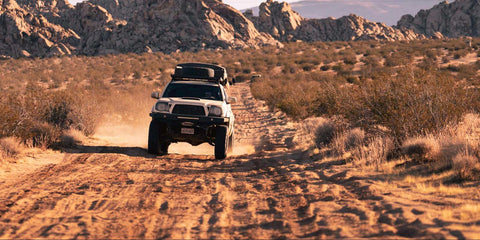
No matter where you live or where you wheel, a washboard section is pretty much a fact of life. This is an area where the Stage 3R really surprised us.
It's not uncommon for shocks to beat you up at lower speeds or get floaty at higher speeds. These weren't just comfortable going slow. They seemed to really thrive there. Carry a little extra speed or hit a rougher section, and boy, are they confidence inspiring. The suspension kept those big 35" F load tires tracking on the ground, which made the truck easy to drive everywhere from the chop to the corners.
We always say mid-tier options like these are the sweet spot for most people, and the Eibachs proved the point. They have that just-right Goldilocks feel most people need, with headroom for even the sportiest drivers.


Dirt-Road Handling
Most of you aren't concerned with limit handling down a dirt road, but on these F-150s it does matter. The stock leaf springs make it really easy for the rear end to skip, hop, and generally feel skittish.
The Stage 3R shocks do a much better job of keeping the rear planted, and they're very neutral and predictable at the limit.


Chunky Trail
Big trucks don't just get beat up on technical trails. They can beat you up too. Articulation on these F-150s has been surprisingly good with everything we've tested so far, but the truck will really toss you around the cabin when things get chunky.
It's too early in our journey with this F-150 to call these the most comfortable option for your average forest trail. They are definitely the most plush thing we've tested on it so far.
This is also where the longer production rear shocks showed up. The extra travel was evident on the more technical sections. Between that and the dialed-in tune, we think the kit gave us more traction, not just more comfort. This is one of those cases where spending a little more might actually have gotten us a little further down the trail.


High Speed
Big body shocks like these don't show their true potential until you start ripping on them at speed off-road. And rip on them we did.
There are options that perform better here, at a much steeper price. But these things can really get down when you ask them to. For boogeying down dirt back roads, floating the occasional roller, and good old-fashioned shenanigans out in the woods, we did find their limits. They let us have a whole lot of fun before we got there.
One caveat: as long as you keep the stock leaf springs, this truck will never be a whoop eater. Repetitive hits leave the rear end pogo sticking unless you go really crazy on the rear shock package. If your goal is to keep your speed up through the open desert, factor in rear springs from somebody like Icon, Deaver, or Atlas.

Eibach Stage 3R vs. Bilstein 6112/8100
Time to talk about old King Billy, because we think Eibach popped out a winner here.
To get it out of the way: if you have the extra money to spend over the Bilstein 6112s and 5160s, run, don't walk, to the Eibachs. And even if you were considering 6112s with 8100s, the boys in red still eke out a win.
Eibach Stage 3R vs. Bilstein 6112/8100 on the 2015+ F-150
| Eibach Stage 3R | Bilstein 6112 + 8100 | |
|---|---|---|
| Rear ride quality | Close enough to call a tie | Close enough to call a tie |
| Front comfort | A level or two ahead | Firm, can be harsh |
| Small bump compliance at low speed | In another league | The 6112's biggest weakness |
| Handling and big bump support | No real sacrifice vs. the Bilsteins | Among the best on the market |
| Out of the box | Preassembled, bolts right on | 6112s available as a complete assembly |
| Ride height adjustment | Threaded body; adjust on the truck in 1/8" steps | Five or six preset circlip settings; needs a spring compressor |
| Spring options | Stiffer and softer rates available | Springs can't be changed |
| Expected service life | Comparable: 70,000 to 100,000 miles when set up properly and used as intended | Comparable: 70,000 to 100,000 miles when set up properly and used as intended |
| Rebuildable | Possibly; Eibach has talked about offering seals | 8100s yes, 6112s no |
Rear: Call It a Tie
In terms of ride quality, the Eibach rear shocks and the 8100s are near enough that it's hard to name a real winner. You could argue the Bilstein is slightly firmer over smaller bumps and infinitesimally better under load. It's so close that our own biases could be throwing off our butt dynos. Call it a tie. It's not worth arguing over.
Front: Eibach, Clearly
The front is where things get a lot more clear-cut. The Eibachs are a level or two ahead in comfort with no real sacrifice in support. Small bump compliance, particularly at lower speeds, is in another league. And they don't feel like they've lost a step in handling or big bump support.
Adjustability and Springs
The Eibachs come preassembled with a threaded body and flat ground universal springs. On the F-150 they use a 500 lb, 3.0"/3.5" tapered spring, which is a little rarer, but Eibach has a couple of stiffer and softer rates to fit your needs.
So you can bolt them on out of the box, then fine-tune the height on the truck with the front end on jack stands. If you add a bumper, winch, or any other heavy mod and need to recover some height, you can change the springs too.
We do offer the 6112s as a complete assembly. But any time you want to change ride height, they go back on a spring compressor, and you choose between five or six preset settings. Throw on a bumper and winch and sag away some lift? If you're out of circlip settings, you're out of options.
Service Life and Rebuilds
We've seen very comparable service lives from Eibach and Bilstein, at least when the shocks are set up properly and used as intended. You can expect to have these for 70,000, 80,000, or even 100,000 miles.
Eibach has also toyed with the idea of making the seals for these available. If that happens, you'd be able to rebuild them when they finally give up the ghost. That's a luxury you get with the 8100s but not the 6112s.
The Verdict
Don't take this as gospel for every vehicle under the sun. But on these F-150s, the Eibachs are definitely the winning choice over Bilstein 6112s with either 5160 or 8100 rear shocks.


Who the Stage 3R Is For
That's a pretty glowing endorsement. But the question we always ask when we test shocks isn't which one is best. It's who a kit is best for. And the short answer here is: just about everybody.
These shocks are more comfortable around town than stock by a country mile. They handle about as well as you could ask of something without electronic control, take load spectacularly, and are as easy to live with at low speed off-road as they are fun when you put the pedal down.
The Stage 3R is a strong fit if you:
- Daily drive your F-150 and want a clear step up in comfort and handling, even if you rarely leave the pavement.
- Wheel on weekends and want more headroom at speed than a 2" body kit gives you.
- Plan to add a bumper, winch, or other weight later and want adjustable height and spring options.
- Were shopping Bilstein 6112s and have room in the budget to step up.
It's a "safe bet" package. Unless your needs are far outside the norm, you can grab a set of these Eibachs knowing they'll more than do the job and leave you very happy with your purchase.
What we hoped for was that Eibach could take the "just right" feel of their lesser kits and apply it to a package with the Goldilocks level of performance most enthusiasts want. They did that and then some. The extra comfort and more secure handling over the Stage 2, the Stage 2R, and the Bilstein 6112s make them worthwhile on the road alone. And we think they still have more potential at higher speeds off-road than the average weekend warrior will ever use.
Does the average person on a 35" tire or smaller need a 2.5" body coilover and shock package? No. But this kit is so good that unless your budget stretches to something even higher performing and more comfortable, you should want one.
Eibach
Pro-Truck Stage 3R Lift Kit
2015-2026 Ford F-150

What's Next for Our F-150
The Stage 3R isn't the only mid-tier, enthusiast-grade option we're testing on this F-150, so it's far too soon to crown a champion. Still to come at this level:
- Fox 2.5 Performance Series IFP
- Old Man Emu MT64
Once we're done with this tier, we'll drop Episode 2 of our F-150 Buyer's Guide series, where we compare all of these options to help you find the right one. If you haven't yet, catch up on Part 1 of the F-150 Buyer's Guide, and subscribe to our YouTube channel for the rest of the series, including the shock reviews and tire fitment videos we've already done on this truck.
In the meantime, browse everything we carry for your truck in our 2021+ F-150 suspension collection.