silverado
2019-2026 Chevy Silverado 1500 Shock Comparison Guide
Posted by Sean Reyes on
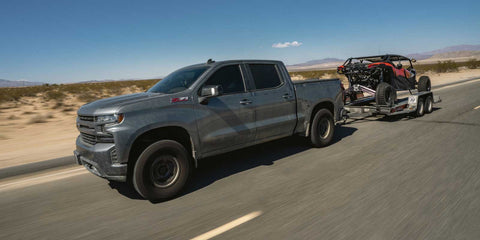
Shock Surplus · Buyer's Guide The 2019-2026 Chevy Silverado 1500 is one of the best-looking half-ton trucks GM has ever built, but it's also one of the most misunderstood platforms when it comes to suspension upgrades. Nearly every owner wants the same thing: get rid of the factory rake, fit larger tires, and gain a more aggressive stance (including our staff member Jeff - owner of this truck). Unfortunately, the internet has convinced thousands of owners that a cheap spacer leveling kit is the answer.
It isn't.
We've spent years testing suspension systems on our own staff-owned 2023 Silverado 1500, evaluating everything from basic height-adjustable shocks to premium remote reservoir coilovers, aftermarket upper control arms, and larger tire combinations. We've installed, driven, aligned, and lived with these setups both on pavement and off-road so you don't have to rely on forum opinions and marketing claims.
One issue became immediately clear during our testing: the factory upper control arm ball joint is the weakest link in the entire front suspension system. Adding a leveling spacer changes suspension geometry and forces the factory ball joint to operate at angles it was never designed for, accelerating wear and, in some cases, leading to complete ball joint separation and catastrophic suspension failure. This problem has become common enough that countless owners and suspension manufacturers now consider upgraded upper control arms mandatory on leveled trucks. That doesn't mean you shouldn't level your Silverado - it simply means you should do it correctly.
At an absolute minimum, we recommend replacing the factory front struts with adjustable-height shocks that provide lift while simultaneously improving ride quality, control, and suspension performance. Better yet, a complete coilover system transforms the truck entirely, offering improved damping, better body control, increased confidence with larger tires, and the ability to actually use your Silverado the way a truck was intended to be used. This guide was built from real-world testing, not catalog descriptions. We'll show you which suspension options make sense for daily drivers, towing rigs, overland builds, and aggressive off-road trucks, while helping you avoid the mistakes that cost Silverado owners thousands of dollars every year.
Shock Surplus · Product Comparison Find YourIt isn't.
We've spent years testing suspension systems on our own staff-owned 2023 Silverado 1500, evaluating everything from basic height-adjustable shocks to premium remote reservoir coilovers, aftermarket upper control arms, and larger tire combinations. We've installed, driven, aligned, and lived with these setups both on pavement and off-road so you don't have to rely on forum opinions and marketing claims.
One issue became immediately clear during our testing: the factory upper control arm ball joint is the weakest link in the entire front suspension system. Adding a leveling spacer changes suspension geometry and forces the factory ball joint to operate at angles it was never designed for, accelerating wear and, in some cases, leading to complete ball joint separation and catastrophic suspension failure. This problem has become common enough that countless owners and suspension manufacturers now consider upgraded upper control arms mandatory on leveled trucks. That doesn't mean you shouldn't level your Silverado - it simply means you should do it correctly.
At an absolute minimum, we recommend replacing the factory front struts with adjustable-height shocks that provide lift while simultaneously improving ride quality, control, and suspension performance. Better yet, a complete coilover system transforms the truck entirely, offering improved damping, better body control, increased confidence with larger tires, and the ability to actually use your Silverado the way a truck was intended to be used. This guide was built from real-world testing, not catalog descriptions. We'll show you which suspension options make sense for daily drivers, towing rigs, overland builds, and aggressive off-road trucks, while helping you avoid the mistakes that cost Silverado owners thousands of dollars every year.
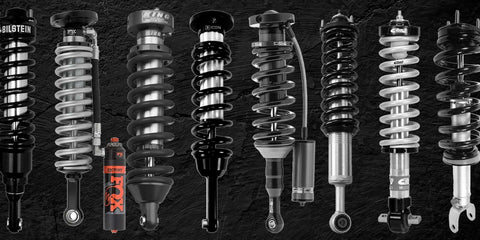
Perfect Shock Honest side-by-side breakdown of every option worth considering for the 2019-2026 Silverado 1500's strut-type front end. Toggle any shock to add or remove it from the comparison. Compare up to 4 shocks at once — turn one off to add another.
Compare
Products
Products
Performance
Road Comfort Daily drive smoothness — pavement, highways, canyon roads
Trail Comfort Fire roads, ranch trails, mild off-road, washboard gravel
Handling & Control Body roll reduction, cornering stability, responsiveness
Haul & Tow Stability under payload, sway control, trailer confidence
High-Speed Off-Road Big hits at speed — washboard, whoops, sustained rough terrain
Specs & Materials
Shock Design Internal construction type & bore
Monotube Strut, Digressive
Monotube Coilover Strut, Linear
Monotube / IFP Strut (46mm)
Monotube Coilover Strut (60mm)
Monotube / IFP Strut (60mm)
2.5" Coilover w/ Remote Reservoir
2.5" w/ Remote Reservoir
2.5" VS Coilover w/ Remote Reservoir
3.0" w/ Remote Reservoir
Twin-Tube, 9-Position Adjustable
Body Material Outer body construction and finish
Steel / Zinc Plated
Steel / Zinc Plated
Aluminum / Clear Anodize
Steel / Zinc Plated
Aluminum / Clear Anodize
Aluminum / Clear Anodize
Steel / Clear Coat
Aluminum / Clear Anodize
Aluminum / Clear Anodize
Steel / Zinc Plated
Adjustability
Height Adjustment Front lift range via coilover collar or perch
Stock Height – 2"
0" – 2.5"
Stock Height – 2"
0" – 3"
0" – 2.5"
0" – 3"
0" – 3"
0" – 3.5"
0" – 3.5"
Pairs w/ Rancho Quicklift Strut
Damping Adjustment On-the-fly or external ride quality tuning
Cost & Value
Price Point Relative investment tier — see scale below
Ideal Use Case
Best For Primary recommended applications
Honest Take What we actually tell customers
A direct bolt-in strut with digressive valving matched to the factory spring rate — it firms up under load without changing anything about how the truck sits. The default recommendation for owners who just want a better version of stock, not a project.
Eibach builds the spring and the strut to work together instead of treating one as an afterthought, and it shows in how composed this feels for a linear-valved shock. On-vehicle height adjustment means you're not stuck with one setting once it's installed. The most well-rounded daily-driver-and-tow-rig pick in this lineup.
Soft and forgiving on pavement, which is exactly what most half-ton owners want most of the time. The smaller 46mm body doesn't have much margin once you load the bed or hook up a trailer, though. Fine for an empty-truck commuter; overmatched the moment it's actually working.
A true coilover strut with an adjustable perch, so you set ride height instead of accepting whatever a fixed-rate strut gives you. Digressive valving handles the transition from empty to loaded better than anything else at this price. The value pick of this lineup — real adjustability for shock money.
More body, more oil, more heat capacity than the 2.0 — a real step up for owners who actually leave pavement on a regular basis, without moving into remote-reservoir pricing. The sensible middle ground between comfort and capability.
The remote reservoir and DSC EVO dial mean this strut doesn't fade when you're towing through washboard or running a fire road at speed, and you can firm it up on the fly instead of living with one static setting. Upgrade the bump stops with this one — it deserves better than stock.
King's reservoir capacity and compression adjustment are built for exactly what a half-ton with real payload and real trail miles asks of a shock — sustained work without cooking the oil. Right out of the box, this keeps pace with a truck that's actually used hard.
Icon's variable-speed valving reacts to how hard you're pushing rather than holding one static curve, which matters on a truck that swings between empty commutes and loaded trail runs more than most. A legitimate King 2.5 competitor with more lift range built in.
A big-bore shock built for sustained high-speed impacts, not commuting — the 3.0" body brings serious heat capacity at the cost of the plush low-speed ride the smaller shocks in this lineup give you. Built for trucks that see real desert speed, not just the tailgate at the trailhead.
The RS9000XL's party trick is the 9-position dial mounted right on the shock body — turn it up before you hitch a trailer, back it off for the commute home, no tools required. It's twin-tube, so it doesn't have the heat capacity of the monotube options here, and it doesn't lift the truck on its own — most owners pair it with Rancho's Quicklift front strut for ride height. A genuinely useful budget option if you want adjustability more than outright capability.
Standard Rating
Best in Class
Adequate / Limited
Price Scale
Under $400
$400–$1,000
$1,000–$1,750
$1,750–$2,500
$2,500+
Every Option Explained Every Shock, Broken Down What you need to know before you buy
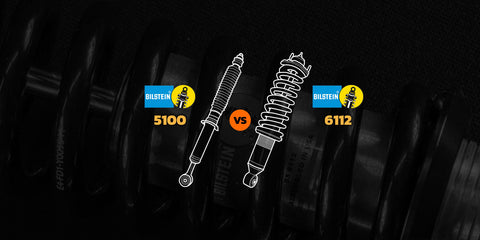
The 5100 is a direct-fit strut assembly, not just a shock - digressive valving are matched to the factory front springs so you get up to 2.5" of lift and better damping without changing anything about how the truck carries itself. It's the shock we point work-truck and daily-driver owners toward first. A clean upgrade over factory, removing stock slop.
DesignMonotube Strut (46mm)
Price Range$220 – $420
Road Comfort3 / 5
Haul & Tow4 / 5
Eibach engineers the spring and strut as one package rather than bolting a generic shock behind a generic spring, and that shows up as a more composed ride than the linear valving alone would suggest. On-vehicle height adjustment via spanner wrench means ride height isn't locked in once it's installed.These shocks have become one of Shock Surplus' most recommended lines.
DesignMonotube Coilover Strut
Price Range$800 – $1,050
Road Comfort4 / 5
Trail Comfort3 / 5
The 2.0 leans all the way into comfort, which is a genuine strength for a half-ton that spends most of its life empty and on pavement. That's also its limit - the smaller 46mm body runs out of margin quickly the moment you load the bed, hook up a trailer, or hit sustained rough terrain.
DesignMonotube / IFP Strut
Price Range$600 – $800
Road Comfort4 / 5
Handling3 / 5
This is a true 2.6in performance strut with an adjustable spring perch, at a price that rivals competitor 2in coilovers. Deviating from Bilstein's typical sportier feel, the 6112 delivers more comfort than expected, while handling tougher terrain offroad with ease. The shock we point budget-conscious buyers toward first, hands down.
DesignMonotube Coilover Strut (60mm)
Price Range$900 – $1,400 / set
Handling4 / 5
Haul & Tow4 / 5
Same simple internal floating piston design as the 2.0, just in a bigger 60mm body with more oil to work with. That extra volume buys heat capacity for owners who actually leave pavement on a regular basis, without the price jump of a remote reservoir setup. A straightforward upgrade for owners who want more shock without more complexity.
Shop Now →
DesignMonotube / IFP Strut (60mm)
Price Range$1,400 – $1,800
Trail Comfort4 / 5
Road Comfort4 / 5
A genuine do-it-all coilover - composed and comfortable on the highway, adjustable the moment the trail or the trailer load picks up. The DSC EVO dial lets you turn compression up or down without tools, so you're not locked into one setup whether you're running empty or towing a camper. This is the shock for those that live on dirt or push their trucks hard.
Design2.5" Remote Reservoir
Price Range$3,200 – $3,600
Handling4 / 5
High-Speed Off-Road4 / 5
King built its reputation on desert racing, and that pedigree translates well to a half-ton that swings between an empty daily commute and a fully loaded trailer or trail run. One of the few shock packages that are as comfortable as the price indicates. Reservoir capacity and compression adjustment mean it doesn't fade when the work gets sustained. Best-in-class trail and high-speed off-road performance in this lineup.
Shop Now →
Design2.5" Remote Reservoir
Price Range$3,000 – $3,800
Trail Comfort4 / 5 — Best
High-Speed Off-Road4 / 5 — Best
Icon's VS platform changes its damping curve based on shaft speed instead of relying on one fixed valving strategy - in practice that means it stays composed over small stuff during a daily commute and firms up exactly when a loaded trailer or rough trail asks more of it. The extra lift range (up to 3.5") is more headroom than King or Fox offer at this tier. The shock to cross-shop against King 2.5 before you decide.
Shop Now →
Design2.5" VS Coilover
Price Range$2,100 – $2,800
Trail Comfort4 / 5 — Best
High-Speed Off-Road4 / 5 — Best
This is the shock for owners who genuinely run this truck fast and rough - big bore, big oil volume, dual speed compression adjustment. The internal bypass allows the normal ride zone to be comfortable and forgiving on the daily drive, while simultaneously delivering extreme control when the terrain gets choppy and speeds ramp up. Reserve this for real desert-speed driving, not the school run.
Design3.0" Remote Reservoir
Price Range$5,000 – $6,000
High-Speed Off-Road5 / 5 — Best
Road Comfort5 / 5
The RS9000XL's whole pitch is the 9-position dial mounted right on the shock - no tools, no guesswork, just turn it up before you tow and back it off for the commute home. It's twin-tube rather than monotube, so don't expect the heat capacity of the coilover options here, and it doesn't lift the truck by itself. Most owners run it alongside Rancho's Quicklift front strut for ride height. The budget-friendly, adjustable alternative to a height adjustable shock that re-uses the factory springs.
DesignTwin-Tube, 9-Position
Price Range$500 – $700 / set
Haul & Tow3 / 5
High-Speed Off-Road2 / 5
From the Shock Surplus Blog More on the 2019-2026 Silverado 1500 Our own install notes, ride reviews, and testing on this exact truck
Common Questions Frequently Asked Questions Straight answers before you buy
Struts. This is the single biggest thing people get wrong shopping for this truck. The outgoing K2XX-generation Silverado (2014-2018) used torsion bars and torsion keys for leveling. The T1-platform truck that launched for 2019 switched to a strut-type front end where the coil spring and damper are combined into one unit, just like Tacoma or 4Runner coilovers. That means "torsion key" leveling kits and "crank the keys" advice from the old truck don't apply here — you're shopping struts and strut spacers, not keys.
No. Different platform, different front suspension architecture entirely. K2XX shocks and torsion keys were built around a torsion bar setup; T1 trucks need strut-specific parts. Always confirm the part is listed for T1 (2019-2026), not the outgoing generation.
No, and this matters more on a half-ton than people expect. A spacer just pushes the factory strut up in its bore — it doesn't change the spring rate or damping, and it eats into your available droop travel. On a truck that's also expected to carry payload and tow, that lost droop travel shows up as a harsher ride and reduced articulation off-road. A real strut or coilover upgrade (Bilstein 6112, Icon, Fox, King) replaces the spring rate and valving to match the new ride height, so the truck actually rides better lifted than it did stock — not just taller.
The 5100 is a direct bolt-in strut assembly built around the factory spring rate — a clean, affordable way to add up to 2" of lift with better digressive damping than stock. The 6112 is a true coilover strut with an adjustable spring perch, a larger 60mm monotube body, and more lift range (up to 3"+). If you're happy with stock ride height or a mild level, the 5100 does the job. If you want to dial in ride height, add real front travel, or you're pairing bigger tires with real payload, the 6112 is the one to spend up for.
Only if you're actually putting sustained speed and rough terrain on it — desert running, fast fire roads, or towing a trailer through washboard for hours. For the daily-driver-that-tows-a-boat-twice-a-summer crowd, a quality non-reservoir strut like the 5100 or 6112 has plenty of heat capacity. Reservoirs earn their keep on trucks that are worked hard and often, not ones that occasionally see a gravel road.
All three are remote-reservoir 2.5-class coilovers aimed at owners who want real off-road capability out of a half-ton. The Fox 2.5 Performance Elite is the most tunable on the fly with its DSC EVO dial. The King 2.5 leans hardest into high-speed off-road composure right out of the box. The Icon 2.5 VS RR uses variable-speed valving that firms up based on how hard you're pushing, with more lift range than the other two. Budget and how often you actually leave pavement should decide which one you land on.
For most owners, yes. It's a big-bore, remote-reservoir shock built for sustained high-speed desert running, and it rides firmer at low speed than the 2.5-class options in this lineup because that's not the job it's built for. It makes sense if you're genuinely running this truck fast and rough on a regular basis. If your off-road use is occasional, a 2.5-class coilover gets you most of the benefit without giving up daily comfort.
A properly matched coilover or strut upgrade shouldn't change your payload or tow capacity on paper, but ride height changes do shift trailer tongue geometry slightly. If you tow often and near the truck's max rating, it's worth setting ride height with a loaded trailer in mind, not just how the truck looks empty in the driveway.
It's a different kind of product entirely. The RS9000XL is a twin-tube shock with a 9-position dial you can turn by hand to firm up damping before towing or back it off for a smoother commute, and it's genuinely handy for that reason. It doesn't have the heat capacity of a monotube design, and it doesn't lift the truck on its own — it's typically paired with Rancho's Quicklift strut up front. Think of it as the budget, adjustable alternative to a fixed-valve strut, not a competitor to the 2.5-class coilovers.